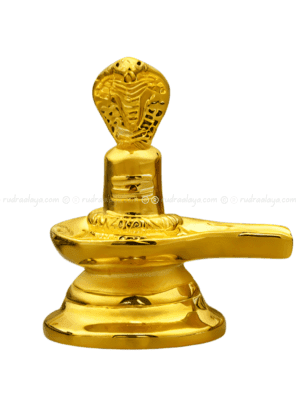
Establishing
Steps to Establish (do a sthapana) of a Shivalingam & Nandi at Home or Office Temple.
Key Ingredients for Shivalingam & Nandi idol Pooja:
1. Cow Milk, Curd, and Water: According to vedic hindu methods, pouring milk and water over the Shivalingam can bring happiness and prosperity. Gather some Gangaajal or water from a flowing mountain river or glacier.
[read more]
2. Pure Honey & Sugar : Pouring honey over the Shivalingam, called shahad abhishek, is said to bring blessings for a life without troubles. You can add Sugar Powder in the water and do abhishekam as well.
3. Panchamrit: A mixture of five sacred substances—pure cow’s milk, yoghurt made of Cow Milk, organic honey, pure cow ghee (clarified fat, cow fat from milk), and sugar powder — is used to bathe the Shiv Linga, invoking blessings for wealth and prosperity. After Snanam offers this on a Shivalingam please take out this material in a clean vessel and this can be shared as Prasadam in the family (called Charnaamrit or Panchaamrit).
4. Sandalwood Paste / Sandal itra / Rose water: Apply white sandal paste or sandalwood powder mixed with rose water to the Shivalingam daily. You should also after a daily bath of shivalingam offer rose water spray, cow ghee lamp (diya) / Chandan itra (sandalwood pure oil), and a white flower on jaldhari at shivalingam to fulfil all your material desires.
5. Vibhuti or Bhasma: Holy ash (Bhasma) sourced from Kashi Vishwanath Temple in Varanasi is shared in a small packet free while we ship a shivalingam or nandi idol. Use the provided packet, and if you need more, order a bigger box online from Rudraalaya.com.
6. Flowers: Offer white or purple flowers, especially the lotus, Champa, jasmine and Crown Flower (Aprajita).
7. Special Flowers: Dhatura, aak, Kaner, madar, and Shammi flowers are especially dear to Lord Shiva. These flowers can often be found in the wild or forest regions.
8. Bel Patra: 108 Belpatram are required for Shivalingam Abhishekam, get a minimum of 151 Belpatram which are clean 3 leaves intact, neither torn nor broken, without any stain or eaten by insects. Bel tree (Aegle marmelos, also known as the wood apple tree), you can also use belpatra, pomegranate and sugar cane juice along with leaves for abhishekam.
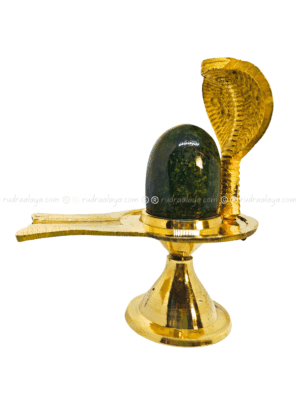
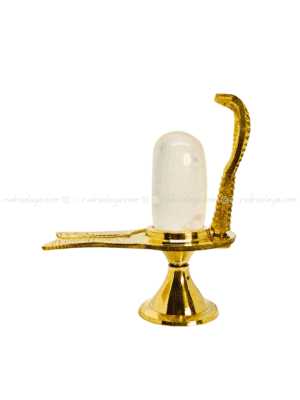
Steps to Install and start abhishekam of a Natural Sphatik (Quartz Crystal) Shivalingam or Parad (Mercury) Shivalingam:
1. Prepare the Space: Choose a spot facing the northeast direction (Ishan Kon) in your home or office. Ensure the area is clean, and offer a red/ yellow new cloth as aasan for the God’s idol to be installed at Mandir / Pooja space.
2. Gather Supplies: Collect water, Pure Gangajal or mountain river/glacier water, roli, moli, rice (akshat), cow milk, curd made of cow milk if possible, and Chandan powder/sandalwood paste with flowers, belpatra and bhasma.
3. Bathing / snanam: First chant Gurumantra 11 times if you have taken vows from your Gurudev 1st do his pooja. If you don’t have any Gurudev chant this mantra “Shivnarayanaye Gurubhiyo Namaha”. Now start pooja while chanting “Om Namah Shivaya” or “Shree Shivaya Namstubhyam” Place shivalingam in a large copper/brass plate (which can hold 7-8 Kalash water). With a small/medium Copper / Brass Kalash “small lota” offer jal abhishekam chanting the mantra “Shivnarayanaye Gurubhiyo Namaha”, remove the 1st water and then in a clean vessel start offering these things. After that offer cow milk, then curd, then shahad (honey) and Sugar Powder, in the same form with the same utensil, after Panchaamrit snanam take this out in a clean vessel to offer others as prasadam. If you have by any chance can arrange belpatra, fresh anar (pomegranate) juice or fresh sugar cane juice do also offer that as used in rudraabhishekam, then offer plain jal mixed with Ganga Jal again to clean the shivalingam.
4. Now clean the copper plate and start the next process. Offer clean jal mixed with Ganga Jal chanting a special mantra. While offering any object to Shivalingam, recite a special mantra. ‘Om Namah Shambhavaya Cha, Mayobhavaya Cha, Namah Shankaraya Cha, Mayaskaraya Cha, Namah Shivaya Cha, Shivatara Cha’, then clean the plate again, offer pure cow ghee rubbing on the shivalingam, be careful this (Mercury / Parad Shivalingam & Nandi) is very very slippery so keep it on a soft clean cloth while doing so, then offer white chandan / sandalwood chandan teeka and from bhasma create 3 lines (tripunda) on shivalingam forehead, like 3 parallel lines (refer images), now light a ghee lamp and dhoopam and start pooja. First, offer dhoopam chanting the mantra “Om Namah Shivaya” or “Shree shivaya Namstubhyam” Place this on the left. Ensuring you are looking at the shivling from behind where the Naga head (serpents head) is covering shivalingam offer pure cow ghee diya (lamp) and rotate both diya and dhoopam minimum 5 or 7 times clockwise chanting mantra. Offer Sandalwood teeka on the forehead of shiva, make a “Sankalp” or make a wish about why are you placing shiva in your home and life, and what all are your material and spiritual desires with joined hands and closed eyes.
5. If you are doing this pooja with your family you should get extra belpatra leaves for everyone. Now we would start the Belpatra Abhishekam process. Make sure all the leaves are washed and water is drained, now chanting the same mantra “Om Namah Shivaya” or “Shree shivaya Namstubhyam” After all the above process is completed on shivalingam, offer each leaf one by one on shivalingam top of the head chanting the same mantra ensuring all three leaves are facing the Nagas Face, (refer images of shivalingam on the internet) offer all 108 leaves on Shiva’s head (above shivlingam) after this let it sit for 4-5 or more minutes and make sure you chant Gurumantra if you have been given, if not do 1 mala (108 times) of this mantra “Shree Shivaya Namstubhyam”, you should have a jaap mala and gomukhi to do so, if you do not have it please buy it from rudraalaya.com at the time of checkout.
6. Now the 3rd step is to clean the shivalingam and remove all leaves and water from the plate. Now after putting all the Chandan and teeka on shivalingam place the shivaligam in pooja ghar in the northeast direction ensuring shivalingam jaldhari and naga are facing north. Now offer Gulab Jal Spray, Chandan Itra and all the flowers you have like Lotus, Champa, jasmine and crown flower (Aprajita), after this offer any of these flowers like dhatura, aak, Kaner, madar, and Shammi flowers directly on shivligam on jaldhari.
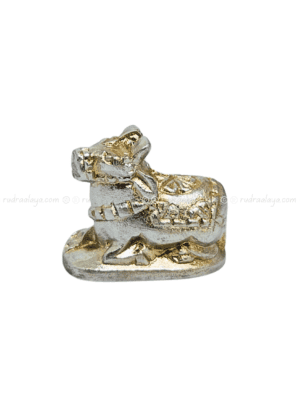
7. Now you can place Nandeeshwar idol (do rudraabhishekam of both idols together) next to facing shivlingam and Naga (refer to images of shivalingam and Nandi on the internet). Now offer 21 or 11 bel patra leaves to shivlingam. And ensure the last belpatra all 3 leaves are placed on the jaldhari facing all 3 leaves towards Nandeeshwar not shivalingam praying for shanti of all pitras and ancestors souls in your family to achieve mental peace, health, wealth and abundance.
8. Light a Lamp / Kapoor Aarati: Place a lamp on the left side of the Shivalingam. Next is to light camphor (Kapoor diya for aarti) which should be waved along with the bells ringing clockwise and doing shiv ji ki aarti as given in the booklet. You will get a free Pooja Booklet printed in Sanskrit and translated into Hindi and English to pronunciate the matras easily, we advise before Pooja please read this website content thoroughly and use the booklet to pre-read and understand the meaning of the chants and vedic prayers to get the best results. For any misunderstanding please contact us or book a 30-minute consultation to clarify your doubts.
9. Install on an Auspicious Day: Perform the installation or sthaphna on any of the monday’s during the month of Shravan (during monsoon) or on Shivratri for special significance, else it can be done anytime leaving two phases one is Pitrapaksha other is Manmaas, please consult our astrologers/acharya for more details.
10. Placement of Shivalingam: Ensure the shivlingam faces north. The crescent moon (shivas head/face), and the Naga on the Shivling should always face north.
11. Nandi Placement: Place a Nandi (sacred bull called Nandeeshwara) facing the Shivlingam. A Shivalingam is considered incomplete without a Nandi, Trishool (Shiva’s sacred weapon Trident is called Shoola / Trishul / Tryah_Shoola) and Shiva’s Damru (a small two-headed drum associated with the deity Lord Shiva).
12. Continuous Water Flow: Place a water-filled pot with a small hole above the Shivalingam to allow a constant flow of water for Jalabhishek. (only if you have a big pooja ghar in case you don’t have big space in your apartment this is not required, we take orders for Jaldhari with stand and pots, trishool and damru on special request for all small and medium sizes of shivalingams as specific parts of accessories along with Shivalingam).
13. Daily Worship: Offer water with black til (black sesame seeds) and perform daily worship rituals in short as you have been guided or told by our acharya please book a consultation for learning Vedic Kriya. Maintain cleanliness around the Shivalingam and Temple. Never use kitchen utensils or non-veg utensils in pooja griha, buy separate new utensils for gods for Abhishek, pooja and offering prasadam and water for drinking. You should take a consultation from a good Acharya or Brahmin on how to do daily worship of shivalingam to attain maximum benefits with desired results.
14. Offer Prasadam: Our Lord Shiva loves fruits, and moog daal mithai (Mung Bead Powder Sweet) which is offered to him in Kashi Viswanath temple, in case you can not offer him these daily you should do this once in a week or a month on Mondays, and daily offer him some dry fruits like almonds, kishmish (raisins) and dhage wali mishri if possible.
Important Rules:
1. Shivling Size: The Shivalingam installed at home should not be too large, ideally between 4- 12 inches in size max.
2. Prohibited Offerings: Never offer tulsi, red roli, turmeric or ketaki flowers on the Shivalingam.
3. Regular Worship: Consistent daily worship and Jalabhishek are essential. Neglecting this for a longer period like 10-15 days can lead to adverse consequences. If you are unwell ask a family member or your children to do the pooja.
4. Benefits of Worship: Worshipping the Natural Sphatik (Quartz Crystal) Shivalingam or Parad (Mercury) Shivalingam brings good luck, peace, health, and security. It also helps increase business success in shops, offices, and factories.
5. Brahmin Pooja with Gotra: It is not necessary that any learned Brahmin should come to your home to do this pooja with your gotra (lineage of gurukul) for establishing any shivlingam / god or goddess idol. If you can plan a pooja with some Brahmin (pandit ji) that would be favourable, however, if you do not wish to or if you are living out of India you can do this yourself after taking a bath wearing fresh new/fresh clothes and making a sanklpa.
Additional Information:
- Belpatra Juices: Used for refining and hardening Parad (Mercury) Liquid. Belpatra leaves represent Shiva’s three eyes and have medicinal properties.
- Auspicious Days: Shivratri, Pradosh Vrata, and Mondays are considered the most important days for seeking Shiva’s blessings.
- Mercury (Parad): Known as Rasraj, Parad is purified through Vedic methods and is self-energized it is not compulsory to consecrate the idol or banalinga as shared above only for parad shivligam as parad (mercury) is a Siddha in itself considered very highly auspicious and most powerful and energy portal in this universe. Worshipping Parad Shivling yields significant spiritual and material benefits.
By following these steps and rules, you can properly establish a Shivling at your home or office, inviting the blessings of Lord Shiva for happiness, prosperity, and protection.
Prominent Natural Sphatik (Quartz Crystal) Shivalingams Established at Temples in India
India, a land steeped in spirituality and devotion, is home to countless temples that house sacred idols and symbols revered by millions of devotees. Among these, the Shivalingam holds a special place as an iconic representation of Lord Shiva. While Shivalingams are often crafted from various materials, the Natural Sphatik (Quartz Crystal) Shivalingam is particularly esteemed for its purity and spiritual potency. This article explores some of the most prominent Natural Sphatik Shivalingams established in temples across India, each with its own unique significance and history.
1. Kanchi Kamakoti Peetham, Kanchipuram
- Location: Chandramouleshwara Mantapam, Kanchi Kamakoti Peetam, Kanchipuram, Tamil Nadu
- Historical Significance: The Kanchi Kamakoti Peetham, established by Adi Shankaracharya, is one of the five major mathas in India. It is a revered centre of learning and spirituality, drawing devotees from across the country.
- Sphatik Shivalingam: The temple houses a rare and highly revered 5 Sphatik Shivalingam, which is worshipped daily with great reverence. The crystal-clear Shivalingam is believed to possess immense spiritual power, and devotees believe that praying to it brings divine blessings, peace, and prosperity. It is said that one of five Chandramouleshwara Linga received by Adi Shankaracharya directly from Lord Shiva, at Mount Kailash is used during the Puja. Sankaracharya’s yatra to Kailasa, the abode of Lord Siva, is one of the most notable events in the history of the Acharya. During the course of his peregrination in the Himalayan region, Shankaracharya desired to have darshan of Sri Paramesvara “Lord Shiva” having his abode in Mount Kailasha. Adi Sankara managed to reach Kailasha quickly because of His yogic power. He had darshan of Lord Paramesvara “Mahadeva” and Devi Parvati. According to tradition, Adi Sankara adored Paramesvara by singing two hymns, known as “Sivapadadi-kesanta strotam” and “Sivakesadi-padanta strotam”. Immensely pleased with Adi Sankara’s prayers, Paramesvara “Lord Shiva” blessed Adi Sankara, presented him with Five Himalyan Sphatika (Quartz) Shivalingams and instructed him to arrange for the worship of the Shivalingams for the sake of the welfare of the universe, indicating also the mode of worship. Paramesvara “Lord Shiva” also handed over to Adi Sankara the palm-leaf manuscript of Soundarya Lahari, which is noted as Siva’s own hymn in praise of the Parasakti. From available biographical information, it is learnt that Shankaracharya placed one of the Five Himalyan Sphatika (Quartz) Shivalingams got at Mount Kailasha and kept the Yoga Linga for his own personal worship and that of his successors at Kanchi.
- Festivals and Rituals: During special occasions like Maha Shivaratri, the Sphatik Shivalingam is adorned with flowers and offered abhishekam (ritual bathing) with holy substances like milk, honey, and ghee. The rituals performed here are said to have profound effects on the spiritual and material well-being of the devotees.
2. Ramanathaswamy Temple, Rameswaram
- Location: Rameswaram, Tamil Nadu
- Historical Significance: The Ramanathaswamy Temple is one of the twelve Jyotirlinga shrines dedicated to Lord Shiva. It holds immense importance in Hindu Vedic Culture, especially in connection with the Ramayana.
- Sphatik Shivalingam: The temple is home to a Sphatik Shivalingam or “Mani Shivalingam”, is believed to have been worshipped by Lord Rama himself. This Shivalingam is considered extremely auspicious, and performing prayers and rituals here is said to absolve devotees of sins and bring them closer to moksha (liberation).
- Special Rituals: The daily rituals, including the early morning abhishekam, are performed with great devotion. Devotees believe that touching or even seeing this Shivalingam can cleanse them of their past karmas.
3. Meenakshi Amman Temple, Madurai
- Location: Madurai, Tamil Nadu
- Historical Significance: The Meenakshi Amman Temple is one of the most famous temples in South India, dedicated to Goddess Meenakshi (a form of Parvati) and Lord Sundareswarar (a form of Shiva). The temple is known for its architectural grandeur and spiritual significance.
- Sphatik Shivalingam: Within the temple complex, a Sphatik Shivalingam is enshrined in a sanctified area. The crystal-clear Shivalingam is revered for its purity and is believed to enhance the spiritual experiences of the devotees who meditate or pray before it.
- Devotional Practices: The Shivalingam is regularly worshipped with rituals that include abhishekam and alankaram (decoration). The temple sees a large influx of devotees, especially during Maha Shivaratri and other significant festivals.
4. Thillai Nataraja swamy Temple,Chidambaram
- Location: Chidambaram, Tamil Nadu
- Historical Significance: The Nataraja Temple in Chidambaram is one of the Panchabhootha Sthalas, representing the element of space (Akasha). It is a major pilgrimage site, especially for devotees of Lord Shiva in his cosmic dancer form, Nataraja.
- Sphatik Shivalingam: Chidambaram temple is associated with Lord Nataraja, or Shiva in his Ananda Tandava pose (the Cosmic Dance of bliss) in the cosmic golden hall (Ponnambalam) and the hall of consciousness (Chit Sabha)Lord Shiva is also worshipped in this temple as “formless form” and this fact is being understood as Chidambara Rahasyam. The temple is renowned for its Sphatik Shivalingam, representing the formless and infinite nature of Shiva. Devotees believe that worshipping this Shivalingam brings clarity, spiritual insight, and liberation from worldly attachments.
- Unique Rituals: The Sphatik Shivalingam is worshipped with special rituals, including abhishekam with holy substances. The crystal’s natural energy is believed to enhance meditation and prayer, making it a powerful spiritual tool.
5. Ekambaranathar Temple, Kanchipuram
- Location: Kanchipuram, Tamil Nadu
- Historical Significance: Ekambaranathar Temple is the largest temple and is located in the northern part of the temple town Kanchipuram. This Saivite temple is one of the five major Shiva temples or Pancha Bootha Sthalams (each representing a primordial element) representing the element – Earth. Sphatik Shivalingam: The ursava deity Lord Ekambareswarar is seated in a glass sanctum sactorum with a roof decorated with rudraksha beads. Just in front of this shrine on the corridor, there is another shrine with Sphatika Lingam along with the vehicle Nandi (Holy Bull). Offering prayer to this Sphatika Lingam will bring a better appearance, confidence and fair thinking.
- Festivals and Rituals: The Sphatik Shivalingam is especially venerated during the festival, where devotees offer prayers and seek blessings for prosperity and spiritual growth.
Conclusion
Natural Sphatik Shivalingams, enshrined in temples across India, are not just sacred symbols but powerful conduits of spiritual energy. Each temple housing a Sphatik Shivalingam has its own unique history and significance, drawing countless devotees who seek divine blessings and spiritual elevation. These Shivalingams are revered for their purity, energy, and the profound spiritual experiences they offer, making them important landmarks in India’s rich religious landscape. Whether it is for meditation, prayer, or simply to witness their divine presence, visiting these temples can be a deeply transformative experience.
Shivalingams are found in many places around the world, including India, Southeast Asia, and beyond:
India – Five South Indian temples each house a linga that represents one of the pancha bhutas. The lingas are located in Kanchipuram (earth), Kalahashti (air), Chidambaram (space), and Thiruvannamalai (fire). The Kailashnath Temple in the Ellora Caves also features an 8th-century lingam carved from a single rock.
Southeast Asia – Lingams have been found in Cambodia, Vietnam, and Indonesia. The Angkor Wat Temple complex in Cambodia and the 9th-century Prambanan Temple complex in Indonesia both contain Shivlings. An 8th-century stone lingam and yoni pedestal have also been discovered in Cát Tiên, Vietnam.
Other countries – Shivalingams can also be found in Khulna, Bangladesh, County Meath, Ireland, Toganji Temple in Nagoya, Japan, Malaysia, Nepal, and Pakistan. It shows that for thousands of years, Hinduism was spread across Central Asia and is the oldest living religion on earth.
Natural settings – Lingams can also be found in nature, such as the annual ice linga that forms in a cave in Amarnath, Jammu.
In Hinduism, the lingam is a devotional image that symbolizes the god Shiva and generative power.
[/read]
Mantra
Mantra | Energising / consecrating a Shivalingam or *Banalingam
(*A baan linga is a stone that is found in nature and is a symbol of worship for Hindus, especially Shaiva’s and Smarta Brahmins. It is a smooth, ellipsoid stone that represents a lingam. The original Narmada Banalingam “Narmadeshwar” is said to be a pure shivalingam that can be kept in a home, temple, or office.)
While offering any object to Shivling, recite a special mantra.
The mantra is:
‘Om Namah Shambhavaya Cha,Mayobhavaya Cha, Namah Shankaraya Cha, Mayaskaraya Cha, Namah Shivaya Cha, Shivatara Cha’
शिवलिंग पर कोई भी द्रव्य अर्पित करते समय एक खास मंत्र का उच्चारण करें.
मंत्र है-
‘ऊं नमः शंभवाय च,मयोभवाय च, नमः शंकराय च, मयस्कराय च, नमः शिवाय च, शिवतराय च’.
[read more]
Chanting Mantra
श्री शिवाय नमस्तुभ्यं | Shree Shivay Namastubhyam
Or
ॐ नमः शिवाय । AUM NAMAH SHIVAYA
Chant 108 times to energise the Shivalingam.
Nandi idol Mantra Chant 21 times
“ॐ तत्पुरुषाय विद्महे, नन्दीकेश्वराय धीमहि, तन्नो वृषभारु प्रचोदयात्।”
‘Om Tatpurushaya Vidmahe, Nandikeshwaray Dhimahi, Tanno Vrishabharu Prachodayat. ‘
Chant 108 times to energise the Nandi Idol.
Without the grace of Lord Mahadev, life is incomplete. Therefore, devotees perform various rituals to please him. Shivaratri, Pradosh Vrat, and (Somwar Vrat) Monday Fasting are considered the most important days in Hinduism to seek Shiva’s blessings. It is believed that if you worship Bholenath (Shiva) with a sincere heart on these days, he showers his grace promptly. Most Shiva devotees visit temples and perform Jalabhishek (ritualistic offering of water {jala abhishekam}) on the Shivlingams. Some devotees also establish (sthapit) a Shivling in their homes and perform daily worship. If you also wish to establish a Shivling in your home, here are some important rules you should know.
Rules for Keeping a Shivalingam at Home:-
- If you want to establish a Shivalingam in your home, install one found on the banks of the Narmada River, known as Narmadeshwar Shivalingam / Natural Sphatik (Quartz Crystal) Shivalingam or Parad (Mercury) Shivalingam with a Nandi (Trishool and Damaru is not compulsory it is good to have). Doing so pleases Mahadev / Shiva immediately and brings success in life.
- If a Narmadeshwar Shivalingam is not available, you can establish a Parad (mercury) Shivalingam / Natural Sphatik (Quartz Crystal) Shivalingam or Parad (Mercury) Shivalingam at home. Scriptures mention these three types of Shivalingam and state that following the complete rituals for their installation ensures happiness and prosperity in the home.
- When establishing a Shivalingam at home, ensure it is placed in the northeast corner (Ishan Kon) as per Grih Vastu. Do not place the Shivalingam in any other direction if not possible you can place it in the west direction as well. But the crescent moon on the Shivalingam should always face north.
- It is believed that a Nandi (the sacred bull of Shiva named Nadeeshwara) should always be installed facing the Shivalingam. Ensure to keep this in mind when establishing a Shivalingam at home.
- There should be a continuous flow of water over the Shivalingam. For this, place a water-filled pot “Jaldhari” above the Shivalingam with a small hole at the bottom to allow a constant flow of water for Jalabhishek. (apply only if you have a big pooja ghar in case you don’t have big space in your apartment this is not required, we take orders for Jaldhari with stand and pots, Trishool and Damru on special requests for all small and medium sizes of shivlingams).
- According to the scriptures, never offer tulsi, red rangoli, or ketaki flowers on the Shivalingam.
- Perform daily worship and offer water to the Shivalingam if you have established it at home. Neglecting daily Jalabhishek after installing the Shivalingam can lead to adverse consequences.
- Maintain cleanliness around the Shivalingam in Pooja Griha. Additionally, a significant rule to know is not to keep a large or black stone or black marble Shivalingam at home. The Shivalingam should ideally be between 4-12 inches in size.**(Black Shivalingam or a white marble shivalingam which is more than 25-30 years old, if turns black, is considered siddha or bhirava, it can only be worshipped by an unmarried person or a knowledgeable tantrik or single person living without a family {old widower etc.}). Before changing an old shivalingam to a new one please book a consult with us to understand the energy transfer process, then only remove the old shivalingam from the home. The old shivalingam after an energy transfer process with the new shivaligam has to be donated with full respect, love and affection to a Kaali Maa Bharavi temple on any day except tuesday, Thursday or Friday. Please book a consultation with us to learn more about this process.
Kundalini: The Coiled Energy Within
Kundalini, a Sanskrit term meaning “coiled one,” is a concept in Hinduism referring to a powerful energy said to lie dormant at the base of the spine. It’s often visualized as a coiled serpent. This energy is believed to be awakened through various spiritual practices like yoga, meditation, or breathwork, leading to spiritual enlightenment and a connection with the divine.
Here’s a breakdown of the key aspects of Kundalini:
- Location: Kundalini is said to reside in the Muladhara chakra, located at the base of the spine.
- Dormancy: In its unawakened state, Kundalini is described as being coiled and dormant.
- Awakening: Through spiritual practices, Kundalini can be awakened, causing it to rise up the spine through various energy centres called chakras.
- Transformation: As Kundalini ascends, it’s believed to activate and balance each chakra, leading to personal transformation and spiritual growth.
- Union: The ultimate goal is for Kundalini to reach the Sahasrara chakra at the crown of the head, signifying the union of individual consciousness with the universal consciousness.
Comparisons to Other Traditions:
The concept of Kundalini has parallels in other spiritual traditions:
- Holy Spirit: In Christianity, the Holy Spirit is sometimes seen as a reflection of Kundalini.
- Chi/Prana: In Chinese medicine and yoga, Chi or Prana is the vital energy that flows throughout the body. It’s seen as similar to Kundalini.
- Resurrection: The awakening of Kundalini is sometimes compared to a spiritual rebirth or resurrection.

Sphatik (quartz crystal) is found in several regions across India, particularly in areas with rich geological diversity. Some prominent locations where Sphatik can be found include:
- Himalayan Region: The Himalayan range is known for its rich deposits of various minerals, including Sphatik. The crystal-clear quality of Sphatik found in this region is highly valued.
- Tamil Nadu: In southern India, Tamil Nadu is known for its deposits of Sphatik, particularly in areas like Karur and Coimbatore. The stones from this region are often used in making idols, rosaries, and other religious items.
- Odisha (Orissa): Odisha, particularly in regions like the Sundargarh and Koraput districts, is another area where Sphatik is found. The quartz crystals from here are often used in traditional crafts and jewellery.
- Andhra Pradesh: The state of Andhra Pradesh also has significant deposits of Sphatik, particularly in regions like Anantapur and Cuddapah. These areas are known for producing high-quality quartz crystals.
- Rajasthan: Rajasthan, known for its vast mineral wealth, also has regions where Sphatik can be found, particularly in areas like Udaipur and Ajmer.
These regions in India are known for their rich deposits of Sphatik, which is used both for their spiritual significance and in various industrial applications. Himalayan spathik is the most valuable among all these minerals.
[/read]
Benefits
Benefits of Performing Shivalingam Pooja
Without the grace of Lord Mahadev, life is incomplete. Therefore, devotees perform various rituals to please him. Shivratri, Pradosh Vrat, and Monday Fasting are considered the most important days in Hinduism to seek Shiva’s blessings. It is believed that if you worship Bholenath with a sincere heart on these days, he showers his grace promptly. Most Shiva devotees visit temples and perform Jalabhishek (ritualistic offering of water with til) on the Shivalingam. Some devotees also establish a Shivalingam in their homes and perform daily worship. If you also wish to establish a Shivalingam in your home, here are some important rules you should know.
[read more]
Benefits of Praying or Meditating on Natural Sphatik (Quartz Crystal) Shivalingam
The Natural Sphatik (Quartz Crystal) Shivalingam holds immense spiritual significance in Hinduism and other spiritual traditions. Known for its purity and energy, the Sphatik Shivalingam is revered as a powerful symbol of Lord Shiva. Meditating or praying with a Sphatik Shivalingam can offer a wide range of benefits, both spiritual and material. Below is a detailed elaboration of these benefits:
1. Amplification of Spiritual Energy
- Purity of Crystal: Sphatik, also known as Quartz Crystal, is considered one of the purest materials in nature. Its clarity and translucence are believed to amplify spiritual energies, making it a potent tool for meditation and prayer.
- Divine Connection: Meditating with a Sphatik Shivalingam helps in establishing a direct connection with the divine. The Natural Sphatik (Quartz Crystal) Shivalingam acts as a conduit, channelling the energies of Lord Shiva and facilitating a deeper spiritual experience.
2. Balance of Energies
- Harmonizing Chakras: Natural Sphatik (Quartz Crystal) Shivalingam is known for its ability to balance and harmonize the chakras (energy centres) in the body. Praying or meditating with a Sphatik Shivalingam helps align these chakras, promoting overall well-being.
- Energy Stabilization: The Shivalingam stabilizes the flow of energy within the body, ensuring that it is neither excessive nor deficient. This balance is crucial for maintaining physical, emotional, and mental health.
3. Enhancement of Concentration and Clarity
- Mental Clarity: The clarity of the Quartz Crystal is symbolic of mental clarity. Meditating with a Sphatik Shivalingam helps clear the mind of unnecessary thoughts, enabling one to focus better on their spiritual goals.
- Improved Concentration: Regular practice of meditation with this Shivalingam enhances concentration, making it easier to focus on tasks and spiritual practices. It is particularly beneficial for those seeking to deepen their meditation practice.
4. Healing and Protection
- Physical Healing: Sphatik is known for its healing properties. Meditating with a Sphatik Shivalingam can aid in the healing of various physical ailments by boosting the body’s natural healing processes.
- Emotional Stability: The crystal is also believed to provide emotional healing, helping individuals overcome stress, anxiety, and depression. It brings emotional stability and peace of mind.
- Protection from Negative Energies: The Sphatik Shivalingam acts as a protective shield, warding off negative energies and evil influences. It creates a positive aura around the worshiper, ensuring their spiritual and physical safety.
5. Manifestation of Desires
- Fulfilment of Wishes: Devotees believe that praying to a Sphatik Shivalingam helps in the manifestation of their deepest desires. Whether it is wealth, success, or spiritual progress, the Natural Sphatik (Quartz Crystal) Shivalingam aids in fulfilling wishes through divine intervention.
- Spiritual Growth: Regular worship with a Sphatik Shivalingam accelerates spiritual growth. It helps in the realization of one’s higher purpose and assists in the journey towards self-realization and enlightenment.
6. Enhanced Meditation Experience
- Calming Effect: The presence of Sphatik creates a serene environment, ideal for meditation. Its calming effect helps in achieving a deep state of meditation, where one can experience inner peace and tranquillity.
- Deepened Spiritual Insight: Meditating with a Sphatik Shivalingam enhances spiritual insight and awareness. It allows the meditator to access higher states of consciousness, facilitating a closer connection with the divine.
7. Alignment with Shiva’s Energy
- Shiva’s Blessings: Sphatik Shivalingam is considered an embodiment of Lord Shiva himself. Praying with it invokes Shiva’s blessings, bringing grace, prosperity, and protection into the devotee’s life.
- Symbol of Unity and Creation: The Shivalingam represents the union of the divine masculine and feminine energies. Meditating on it helps in understanding and embracing this cosmic union, leading to spiritual harmony and balance.
8. Improvement in Relationships
- Harmonious Relationships: The positive vibrations emitted by the Sphatik Shivalingam help in creating harmonious relationships. It promotes love, understanding, and compassion among individuals.
- Strengthening Bonds: Meditating with the Shivalingam strengthens bonds between family members and loved ones, fostering unity and togetherness.
9. Economic and Material Prosperity
- Wealth Attraction: The Sphatik Shivalingam is also believed to attract wealth and material prosperity. Regular worship can lead to financial stability and abundance.
- Success in Endeavors: It is said that those who worship the Sphatik Shivalingam with devotion find success in their professional and personal endeavours, as it removes obstacles and paves the way for progress.
Conclusion
The Natural Sphatik (Quartz Crystal) Shivalingam is a powerful spiritual tool that offers numerous benefits. From amplifying spiritual energy and balancing chakras to providing protection, healing, and prosperity, its advantages are vast and profound. Whether you are seeking spiritual growth, emotional stability, or material success, meditating or praying with a Sphatik Shivalingam can be a transformative practice. Embracing this sacred symbol of Lord Shiva in your spiritual journey can lead to a more harmonious, peaceful, and fulfilled life.
Rules for Keeping a Shivling at Home
1. Choosing the Shivalingam:
- Narmadeshwar Shivling: If you want to establish a Shivalingam in your home, install one found on the banks of the Narmada River (5th longest river of India originates from Narmada Kund at amarkantak, known as the daughter of Shiva). Doing so pleases Mahadev “Lord Shiva” immediately and brings success in life. These natural-looking “Banlingas” are believed to be the personified form of Shiva and there is a popular saying, “Narmada Ke Kanker utte Sankar” which means that “Shiva is in the pebbles of Narmada”.
- Parad (Mercury) Shivling : If a Narmadeshwar Shivling is not available, you can establish a Parad Shivalingam / Natural Sphatik (Quartz Crystal) Shivalingam at home. Scriptures mention these two types of Shivalingams are the most powerful ones and state that following the complete rituals for their installation ensures happiness and prosperity in the home.
- Natural Sphatik (Quartz Crystal) Shivalingam : Sphatik Shivalingam stands out as a powerful choice. Made from natural indian / himalayan quartz crystal, the Sphatik Shivalingam is revered for its purity and ability to enhance spiritual energy. This crystal is known to radiate a high vibrational frequency, (high oscillating frequency of 786,000 pulses per second, a live stone) making it an excellent tool for meditation and spiritual practices. The Sphatik Shivalingam is believed to absorb and amplify positive energy, providing clarity of mind and a sense of peace to those who meditate upon it. When choosing a Sphatik Shivalingam, it is essential to consider the quality of the crystal—ensuring it is clear, free from impurities, and resonates with the devotee’s spiritual intentions. The size and shape can vary, but the most important factor is the connection one feels with the Shivalingam, as it becomes a focal point for devotion and a conduit for divine blessings.
2. Placement:
- Place the Shivalingam in the northeast corner (Ishan Kon). Do not place the Shivalingam in any other direction.
- The crescent moon on the Shivalingam should always face north.
- A Nandi (the sacred bull) should always be installed facing the Shivalingam.
- There should be a continuous flow of water over the Shivalingam. For this, place a water-filled pot (jaldhari) above the Shivling with a small hole at the bottom to allow a constant flow of water for Jalabhishek. (apply only if you have a big pooja ghar in case you don’t have big space in your apartment this is not required, we take orders for Jaldhari with stand and pots, Trishool and Damru on special requests for all small and medium sizes of shivalingams)
3. Prohibited Offerings:
- Never offer tulsi, red rangoli, or ketaki flowers on the Shivling.
4. Daily Worship:
- Perform daily worship and offer water to the Shivalingam if you have established it at home. Neglecting daily Jalabhishek after installing the Shivalingam can lead to adverse consequences.
- Maintain cleanliness around the Shivalingam.
- The Shivalingam should ideally be between 4-12 inches in size.
- Never keep a Shivalingam in your bedroom or a room where you sleep.
Difference Between Nepali and Indonesian Java Rudraksha
Nepali Rudraksha and Indonesian Java Rudraksha differ in several key aspects. Nepali Rudraksha beads are generally larger, ranging from 17mm to 35mm, compared to the smaller Indonesian Java Rudraksha, which typically measures between 8 to 20mm. In terms of weight, Nepali Rudraksha beads are heavier than their Java counterparts. Additionally, Nepali Rudraksha is considered more powerful for spiritual healing, offering more potent benefits. The physical appearance also varies; Nepali Rudraksha beads have clear, well-defined faces with deeper grooves, whereas Java Rudraksha beads do not have such distinct faces and deep divisions.
Magical Rudraksha Combinations (apart from a *Sampoorna Nepali Rudraksha Siddhamala) :
In Hindu Vedic Astrology and Puranas, combining different types of rudraksha beads is said to bring multiple benefits. Here are some combinations that include 7, 8, and 10 mukhi rudraksha:
7 and 8 Mukhi Nepali Rudraksha: The 7 Mukhi Nepali Rudraksha represents Goddess Lakshmi and is ruled by Saturn, while the 8 Mukhi Nepali Rudraksha represents Lord Ganesha and is ruled by Ketu. Together, they are said to represent wealth and success and may help with money and prosperity, job prospects, and protection from problems.
7, 8, and 12 Mukhi Nepali Rudraksha: This combination is said to help with financial growth, fame, and success, and may also eliminate fear, remove obstacles, and build self-confidence. The 12 Mukhi Nepali Rudraksha represents the Lord Sun (Surya), the 8 Mukhi Nepali Rudraksha represents Ganesha, and the 7 Mukhi Nepali Rudraksha represents Mahalaxmi.
7, 8, and 13 Mukhi Nepali Rudraksha: This combination is said to help with financial growth, fame, and success, and may also bring blessings from Goddess Lakshmi, Ganesha, and Kamadeva. The 13 Mukhi Nepali Rudraksha represents Venus “Shukra”, the 8 Mukhi Nepali Rudraksha represents Ganesha, and the 7 Mukhi Nepali Rudraksha represents Mahalaxmi.
(*Sampoorna Nepali Rudraksha Siddhamala is a combination of all Nepali Beads including One to 14 Mukhi, Ganesh Mukhi and Gauri Shankar to make very powerful we can add Trijuti Nepali Rudraksha to give results of Indra Mala or equivalent to 21 Mukhi)
Configuration of Sampoorna Nepali Siddha Mala (full combination of beads)
*1 Mukhi Nepali Pure / Annamukhi / Sawar Mukhi / Nirankar Mukhi
(Regular / Collector as per clients choice / budget)
(based on client’s budget we recommend Nepali half moon / pure refer article below on one Mukhi)
Ganesh Mukhi Nepali – 1 (Regular / Collector as per clients choice/budget)
Gaurishankar Nepali – 1 (Regular / Collector as per clients choice/budget)
(*Gauri Shankar with Garbha is also found in rare cases)
14 Mukhi Nepali Rudraksha x 1 Seed
(Regular / Collector as per clients choice / budget)
13 Mukhi Nepali Rudraksha x 1 Seed
(Regular / Collector as per clients choice / budget)
12 Mukhi Nepali Rudraksha x 1 Seed
(Regular / Collector as per clients choice / budget)
11 Mukhi Nepali Rudraksha x 1 Seed
(Regular / Collector as per clients choice / budget)
10 Mukhi Nepali Rudraksha x 1 Seed
(Regular / Collector as per clients choice / budget)
09 Mukhi Nepali Rudraksha x 1 Seed
(Regular / Collector as per clients choice / budget)
08 Mukhi Nepali Rudraksha x 1 Seed
(Regular / Collector as per clients choice / budget)
07 Mukhi Nepali Rudraksha x 3 Seeds
(Regular / Collector as per clients choice / budget)
06 Mukhi Nepali Rudraksha x 3 Seeds
(Regular / Collector as per clients choice / budget)
05 Mukhi Nepali Rudraksha x 3 Seeds
(Regular / Collector as per clients choice / budget)
04 Mukhi Nepali Rudraksha x 3 Seeds
(Regular / Collector as per clients choice / budget)
03 Mukhi Nepali Rudraksha x 3 Seeds
(Regular / Collector as per clients choice / budget)
02 Mukhi Nepali Rudraksha x 3 Seeds
(Regular / Collector as per clients choice / budget)
Minimum Count of Rudraksha Beads in a siddha mala are 25+03 = 28 or 25+03+02 = 30
If your budget is great we do recommend adding a Trijuti Nepali Rudraksha with a Nirankar Mukhi (Regular / Collector as per client choice/budget). In the market, a general mala of the lower budget is also available with 1 bead each yet they do not offer Nepali 1 mukhi seed.
The tentative budget of single bead mala starts from – with single bead only 6,11,814/- without one mukhi Nepali with one sawar one mukhi 8,11,814/- with nepali annamukhi 18,62,814/-
A Sampoorna Nepali Siddha Mala with the most premium quality Range starts from
with sawar minimum 10,14,026/- onwards.
with one mukhi annamukhi 21,40,026/- onwards.
with one mukhi annamukhi + Nirankar 21,40,026/- / 36,91,026/- onwards.
with one mukhi moon shap nepali + Nirankar 64,40,026/- / 79,91,026/- onwards.
with one mukhi pure + Nirankar 1,49,91,026/- onwards.
with one mukhi pure + nirankar + moon shape nepali = 2,05,42,026 /- can go up to 4,17,91,328 /- max
[/read]
Pooja
How to Perform Shiva Pooja Daily: A Step-by-Step Guide
Performing Shiva Pooja is a deeply spiritual practice that brings peace, prosperity, and protection. Here is a simple guide to help you perform the ritual at home with the essential ingredients and steps.
[read more]
Key Ingredients for Shivalingam Daily Pooja :
- Water and Black Til (Kala Til / black sesame seeds): Chant the Gurumantra 11 times if you have taken vows from your Gurudev. If not, chant “Shivnarayanaye Gurubhiyo Namaha.” Place the Shivalingam and Nandeeshwara in a large copper or brass plate. Perform Jal Abhishekam while chanting “Om Namah Shivaya” or “Shree Shivaya Namstubhyam”.Take shivalingam from pooja griha and place it in a clean copper/brass plate. Then do snanam with clean water and chant the mantra “ Shree Shivaya Namastubhya” After that clean the whole Shivalingam and Nandeeshwara with a clean dry cloth used in pooja griha only. Apply white sandalwood paste and make three lines (tripunda) on the Shivalingam’s forehead with bhasma and Chandan, then offer chandan tilak.
- Vibhuti or Bhasma: Offer tripunda, 3 lines of Vibhuti or Bhasma (Holy ash) sourced from Kashi Vishwanath Temple in Varanasi on the shivalingam and a white chandan teeka/tilak on shivalingam forehead (refer images)
- Flowers: Offer white or purple flowers like lotus, Champa, jasmine and Crown Flower (Aprajita) whichever is easily available. While offering flowers chant ‘Om Namah Shambhavaya Cha, Mayobhavaya Cha, Namah Shankaraya Cha, Mayaskaraya Cha, Namah Shivaya Cha, Shivatara Cha’. Check the mantra shared on our website rudraalaya.com.
- Special Flowers: Flowers like Dhatura, aak, Kaner, madar, and Shammi, which are dear to Lord Shiva should be offered occasionally and especially during the Shravan (Monsoon) Season of the year.
- Belpatra Abhishek: Use a minimum of 1, 3 or 11 Belpatram for abhishekam, ensuring they are clean with complete three leaves intact. If not possible daily at least once in a month on a Monday or every Monday do offer belpatra leaves or belpatra juice on shivalingam. Keep chanting “Shree Shivaya Namstubhyam” while offering belpatra leaves.
- Lighting the Lamp and Dhoopam: Light a ghee lamp (pure cow ghee only) and offer chandan dhoopam, placing them on the right. Offer dhoopam chanting “Om Namah Shivaya” or “Shree Shivaya Namstubhyam”. Rotate the lamp and dhoopam five or seven times minimum clockwise as pooja archana.
- Final Offerings: Place the Shivalingam in the pooja ghar in the northeast direction. Offer flowers like lotus, jasmine and Crown Flower (Aprajita). Place a Nandeeshwara facing the Shivalingam. Offer prasadam such as fresh seasonal fruits, dry fruits, dhagey wali mishri or moong dal sweets whatever is easily available at home or the office.
[/read]
Abhishekam
Abhishekam Procedure: Ensure the Shivling is placed in the northeast direction of the pooja ghar after snanam.
Gather necessary items: Vibhuti or Bhasma, Tripunda, white chandan teeka, flowers (lotus, Champa, jasmine, Aprajita), Belpatram, ghee lamp, dhoopam, prasadam, fresh seasonal fruits, dry fruits, and sweets.
[read more]
Tripunda and Teeka: Take Vibhuti or Bhasma sourced from Kashi Vishwanath Temple in Varanasi. Apply three lines of Vibhuti on your forehead in Tripunda style: one vertical line upwards the centre as tilak / teeka and three horizontal lines across the forehead. (refer to images of shiva/ shivalingam)
Offering Teeka on Shivalingam: Apply a white chandan teeka on the forehead of the Shivalingam. This signifies reverence and auspiciousness.
Flower Offering: Choose white or purple flowers like Lotus, Champa, jasmine and Crown Flower (Aprajita). Offer them on the Shivalingam while chanting: “Om Namah Shambhavaya Cha, Mayobhavaya Cha, Namah Shankaraya Cha, Mayaskaraya Cha, Namah Shivaya Cha, Shivatara Cha.”
Special Flowers: Occasionally offer special flowers like Dhatura, Aak, Kaner, Madar, and Shammi, especially during the Shravan (monsoon) season.
Belpatra Abhishek: Perform Abhishek with Belpatra. Use a minimum of 1, 3, or 11 Belpatram. Ensure the Belpatram leaves are clean with three intact leaves. Ideally, perform daily; if not possible, perform it at least once a month on a Monday.
Chanting Mantras: While offering Belpatra, chant “Shree Shivaya Namstubhyam” to invoke the blessings of Lord Shiva.
Lighting Lamp and Dhoopam: Light a ghee lamp and Chandan dhoopam. Place them on the right side of the Shivalingam. Offer dhoopam while chanting “Om Namah Shivaya” or “Shree Shivaya Namstubhyam.” Rotate the lamp and dhoopam five or seven times clockwise around the Shivling.
Final Offerings: After completing the rituals, offer flowers like lotus or Crown Flower (Aprajita) to the Shivling. Place Nandi facing the Shivalingam to symbolize devotion. Offer prasadam, fruits, dry fruits, and sweets as per the availability at home or office.
Prayer: Conclude the pooja with gratitude and devotion towards Lord Shiva.
Maintain the sanctity of the pooja space and Shivalingam for continued blessings and auspiciousness. Use free Pooj Pustika (booklet) shared with the shivalingam, to do prayers or Shiva Chalisa / Shiv ji ki aarti as advised by our astrologers/acharya.
This provides a structured approach to conducting Abhishekam and Shivalingam Pooja, ensuring adherence to traditional practices and reverence towards Lord Shiva as suggested by acharya at rudraalaya.com.
[/read]
Do’s & Dont’s
Do’s and Don’ts in Shivalingam Puja: A Guide to Proper Shiva Worship
Shivalingam puja, the reverential worship of Lord Shiva in the form of a lingam, holds profound significance in Hindu traditions.
To ensure the sanctity and proper observance of this sacred ritual, here’s a comprehensive guide on what to do and what to avoid during Shivling puja:
Do’s:
Placement and Direction: Place the Shivalingam in the east or north direction of your puja room, ensuring it faces either direction. Right-Hand Usage: Use your right hand exclusively while performing the worship rituals.
[read more]
Offerings:
- Water (Jal): Offer water to the Shivalingam, ideally using a vessel made of brass, bronze, or silver. Also, use black til (Black sesame seeds) to get pitra dosha shanti and abundance to be offered on shivalingam
- Belpatra: Bilva leaves (Belpatra) are considered highly auspicious and should be offered during the puja.
Abhishek (Ritual Bathing):
- Perform abhishekam with substances like raw milk, sandalwood paste, and sugarcane juice. (not daily once in a month on Monday or every Monday during Shravan maas).
- Use traditional materials for abhishekam and avoid using modern containers such as plastic or steel.
Don’ts:
Materials to Avoid:
- Steel Stand: Do not use a steel stand for abhishekam or for placing the Shivalingam during worship into a steel, plastic or glass bowl.
- Coconut Water and Vermillion: Avoid offering coconut water, vermillion (kumkum), and certain flowers like ketaki, kevda, or Champa.
Specific Flowers:
- Inappropriate Flowers: Never offer flowers such as silk cotton tree (Semal), Juhi, Kadamba, and Ketaki on the Shivalingam as they are considered inappropriate for worship.
What Not to Do with Shivling?
Apart from the rituals directly related to puja, there are certain practices and considerations to be mindful of when maintaining a Shivling at home:
Placement Considerations:
- Near the Bed: Avoid placing the Shivalingam near the end of the bed or in a position where it may be disrespected inadvertently. Never keep shivaligam in bedrooms.
- Under Stairs: Do not keep the Shivalingam or its image under the stairs, which might imply disrespect.
- Multiple Photos: It’s advisable not to keep more than one photo or representation of Shiva in your home to maintain reverence.
Size and Worship Consistency:
- Shivalingam Size: Preferably keep a small Shivalingam at home, no larger than the size of your thumb up to 6 inches maximum up to 12 Inches. Larger Shivalingam or black colour are more suitable for temples.
- Regular Worship: If you are unable to perform morning and evening prayers to the Shivalingam regularly, it might be better not to keep it at home and do a manas (mental) abhishakam of any shivalingam.
Offering Restrictions:
- Avoid Certain Offerings: Refrain from offering items like turmeric (haldi), kewda and Champa flowers, coconut water, or saffron to the Shivling.
Additional Practices:
- Vibhuti Application: Worshipping the Shiva Lingam without applying Vibhuti / Tripunda (sacred ash) is generally not recommended.
- Proper Attire: It is customary to wear an upper cloth (like a dhoti or shawl) while performing Shivalingam worship, wear all your rudraksha mala’s except jaap mala while worship and they should be visible to Shivalingam at the time of worship to receive energy.
- Floral Choices: Avoid using fragrant screwpine flowers in the worship of the Shivalingam.
By adhering to these guidelines, devotees can ensure that their Shivalingam puja is conducted with utmost respect and adherence to tradition, fostering a deep spiritual connection with Lord Shiva. This reverence not only enhances personal spirituality but also upholds the sanctity of the ancient rituals associated with Shiva worship.
[/read]
Rudra Abhishekam
Overview of Mahashivaratri
Mahashivaratri is one of the most significant of the twelve Shivaratris celebrated each year. This festival is observed with immense devotion and enthusiasm by Lord Shiva’s devotees. Known by many names such as Mahadev, Shankar, Bhole Nath, and Baba, one of his prominent names is Rudra, often associated with his fierce and powerful nature as described in the Vedas. The Rudra Tandav dance epitomises Lord Shiva’s relentless and powerful essence (this mudra is called Nataraja). Among the various rituals performed on Mahashivaratri, the Rudrabhishek holds special importance and must be conducted with the correct procedure and pure devotion.
[read more]
What is Rudrabhishek Pooja (Abhishekam)?
Rudrabhishek Pooja is a highly revered ritual in Hinduism known for its purity and sanctity. This ritual involves giving a sacred bath to Lord Shiva’s idol or Shivalingam with various holy ingredients, accompanied by chanting mantras and offering flowers.
Ingredients Needed for Rudrabhishekam Pooja
- Flowers
- Incense sticks
- Pure Cow Ghee
- Pure Curd made of Cows Milk
- Organic Honey
- Fresh cows milk (not boiled)
- Panchamrit (a mixture of cow milk, cow milk curd, ghee made of pure cow milk, honey, dry fruits and sugar)
- Rose water (Gulab Jal)
- Sweets (Mithai) (ensure a sweet made of moong dal with desi ghee is offered)
- Ganga Jal (holy water from the Ganges or running river water from mountains or glaciers)
- Camphor (Bheemsani Kapoor)
- Supari (betel nut), laung (cloves with flowers intact), green small elaichi (cardamom)
- Bel Patra (leaves from the Bael tree) (minimum 108 + 21 extra leaves)
- Holy Ash (Vibhuti)
Steps to Perform Rudrabhishek
Preparation:
- Setup: Place a copper/brass plate in the ritual area and set the Shivalingam on it.
- Light a Lamp: Light a lamp (diya) with mustard oil or pure cow ghee and place it to the right of the Shivalingam.
- Arrange Ingredients: Arrange all puja ingredients on a tray and sit comfortably facing east/north, using an asana (mat) to avoid sitting directly on the floor.
- Dress: Wear clean ethnic clothes.
Purification and Invocation:
- Achaman: Perform Achaman (purification) while reciting religious chants such as “Om Narayanaya Namah.”
- Seek Blessings: Seek blessings from Lord Ganesha, Lord Indra, and your Kul Devta and Devi before starting the puja.
Ritual Offerings:
- Bel Patra Offering: Offer Bel Patra while chanting “Om Namah Shivaya” and place flowers and akshat (rice) near the lamp.
- Move Shivling: Move the Shivalingam to an open place or tray, placing it on a Bel Patra for the Rudrabhishek.
Performing Rudrabhishek:
- Water Offering: Start by pouring water on the Shivalingam while chanting “Om Namah Shivaya.” If you don’t know mantras play a YouTube video of rudrabhishek with full pooja and mantra.
- Panchamrit Offering: Gently pour Panchamrit on the Shivalingam, followed by offerings of Chandan (sandalwood paste), flowers, raw cow milk, and Ganga Jal.
- Clean and Place: Clean and wipe the Shivalingam and return it to its original place on a Bel Patra.
- Additional Offerings: Offer Vastra (cloth) and Janeu (sacred thread), and apply Chandan and tripunda with your right three fingers don’t use your thumb.
- Incense and Lamp: Light incense sticks (geeli chandan dhoop without bamboo) and a ghee lamp, then sprinkle holy ash (Bhasma), Bel Patra, Durva, and flowers while ringing a bell (pooja bell).
- Final Offerings: Offer fruits, paan, supari, laung, elaichi, and Dakshina while continuously chanting “Om Namah Shivaya” or the Maha Mrityunjaya Mantra.
- Aarti: Conclude the puja by performing Shiv ji ki aarti with camphor, doing parikrama (circumambulation), and showering Lord Shiva with flowers while seeking his blessings.
Types of Rudrabhishek and Their Benefits
- Jalabhishek: Using water for longevity.
- Dudh Abhishek: Using raw cow milk for longevity.
- Shahad Abhishek: Using honey for a life free from troubles.
- Panchamrit Abhishek: Use a mixture of milk, curd, ghee, honey, dry fruits and sugar powder or dhage wali mishri for wealth and prosperity.
- Ghee Abhishek: Using clarified butter (pure cow ghee) for health and freedom from illness.
- Dahi Abhishek: Using curd for the blessing of children for childless couples.
Rudrabhishek Mantra
Reciting the Rudrabhishek mantra, also known as Rudra Mantra, is believed to invoke Lord Shiva’s blessings:
|| ॐ नमो भगवते रूद्राय ||
|| Om Namo Bhagwate Rudraya ||
Or
|| श्री शिवाय नमस्तुभ्यं ||
|| Shree Shivay Namastubhyam ||
Or
|| ॐ नमः शिवाय ||
|| AUM NAMAH SHIVAYA ||
Detailed Rudrabhishek Procedure
- Bathing of Shivalingam: Begin by bathing the Shivalingam with ritual ingredients like milk, yoghurt (dhai), butter (desi ghee), and honey.
- Decoration of Shivalingam: Decorate the Shivalingam with Bel leaves (offering one by one chanting mantra), flowers, and Rudraksha beads.
- Recital of Laghunyasa: Chant Laghunyasam for health and healing. Sri Rudram Laghunyasam is a prayer that is part of Sri Rudram and is chanted before Namakam and Chamakam. Nyasa is imbibing God’s principle into self and becoming fully divine before worshipping the Lord. There are 2 Nyasa’s – 1) Mahanyasa 2) Laghunyasa. The former is a long form of Nyasa while the latter is a short form of Nyasa.
Laghunyasam in Sanskrit (Dev vaani):
ॐ अथात्मानगं शिवात्मानगं श्रीरुद्ररूपं ध्यायेत्।
शुद्धस्फटिकसंकाशं त्रिनेत्रं पञ्चवक्त्रकम्।
गङ्गाधरं दशभुजं सर्वाभरणभूषितम्।
नीलग्रीवं शशांकांकं नागयज्ञोपवीतिनम्।
व्याघ्रचर्मोत्तरीयं च वरेण्यं अभयप्रदम्।
कमण्डल्वक्षसूत्राणां धारिणं शूलपाणिनम्।
ज्वलन्तं पिङ्गलजटाशिखामुद्योतधारिणम्।
वृषस्कन्धसमारूढं उमादेहार्धधारिणम्।
अमृतेनाप्लुतं शांतं दिव्यभोगसमन्वितम्।
दिग्देवतासमायुक्तं सुरासुरनमस्कृतम्।
नित्यं च शाश्वतं शुद्धं ध्रुवमक्षरमव्ययम्।
सर्ववापिनमीशानं रुद्रं वै विश्वरूपिणम्।
एवं ध्यात्वा द्विजः सम्यक् ततः यजनमारभेत्।
अथातो रुद्र स्नानार्चनाभिषेक विधिं व्याख्यास्यामः।
आदित एव तीर्थे स्नात्वा उदेत्य शुचिः प्रयतः ब्रह्मचारी शुक्लवासा देवाभिमुखः स्थित्वा आत्मनि देवताः स्थापयेत्।
ॐ प्रजनने ब्रह्मा तिष्ठतु।
पादयोर्विष्णुस्तिष्ठतु।
हस्तयोर्हरस्तिष्ठतु।
बाह्वोरिन्द्रस्तिष्ठतु।
जठरे अग्निस्तिष्ठतु।
हृदये शिवस्तिष्ठतु।
कण्ठे वसवस्तिष्ठन्तु।
वक्त्रे सरस्वती तिष्ठतु।
नासिकयोर्वायुस्तिष्ठतु।
नयनयोश्चन्द्रादित्यौ तिष्ठेताम्।
कर्णयोरश्विनौ तिष्ठेताम्।
ललाटे रुद्रास्तिष्ठन्तु।
मूर्ध्न्यादित्यास्तिष्ठन्तु।
शिरसि महादेवस्तिष्ठतु।
शिखायां वामदेवस्तिष्ठतु।
पृष्ठे पिनाकी तिष्ठतु।
पुरतः शूली तिष्ठतु।
पार्श्वयोश्शिवाशंकरौ तिष्ठेताम्।
सर्वतो वायुस्तिष्ठतु।
ततो बहिः सर्वतोऽग्निज्वालामालाः परिवृतास्तिष्ठतु।
सर्वेष्वङ्गेषु सर्वादेवता यथास्थानं तिष्ठन्तु। मां रक्षन्तु। ॐ अग्निर्मे वाचि श्रितः।
वाग्धृदये। हृदयं मयि। अहममृते। अमृतं ब्रह्मणि। वायुर्मे प्राणे श्रितः।
प्राणो हृदये। हृदयं मयि। अहममृते। अमृतं ब्रह्मणि।
सूर्यो मे चक्षुषि श्रितः। चक्षुर् हृदये। हृदयं मयि। अहममृते।
अमृतं ब्रह्मणि। चन्द्रमा मे मनसि श्रितः। मनो हृदये। हृदयं मयि।
अहममृते। अमृतं ब्रह्मणि। दिशो मे श्रोत्रे श्रिताः।
श्रोतृगं हृदये। हृदयं मयि। अहममृते। अमृतं ब्रह्मणि।
आपो मे रेतसि श्रिताः। रेतो हृदये। हृदयं मयि। अहममृते।
अमृतं ब्रह्मणि। पृथिवी मे शरीरे श्रिता। शरीरगं हृदये। हृदयं मयि।
अहममृते। अमृतं ब्रह्मणि। ओषधिवनस्पतयो मे लोमसु श्रिताः।
लोमानि हृदये। हृदयं मयि। अहममृते। अमृतं ब्रह्मणि। इन्द्रो मे बले श्रितः।
बलगं हृदये। हृदयं मयि। अहममृते। अमृतं ब्रह्मणि। पर्जन्यो मे मूर्ध्नि श्रितः।
मूर्धा हृदये। हृदयं मयि। अहममृते। अमृतं ब्रह्मणि। ईशानो मे मन्यौ श्रितः।
मन्युर् हृदये। हृदयं मयि। अहममृते। अमृतं ब्रह्मणि। आत्मा मा आत्मनि श्रितः।
आत्मा हृदये। हृदयं मयि। अहममृते। अमृतं ब्रह्मणि। पुनर् मा आत्मा पुनरायुरागत्।
पुनः प्राणः पुनराकूतमागत्। वैश्वानरो रश्मिभिर्वावृधानः। अन्तस्तिष्ठत्वमृतस्य गोपाः।
अस्य श्री रुद्राध्याय प्रश्न महामन्त्रस्य अघोर ऋषिः, अनुष्टुप् छन्दः, संकर्षणमूर्तिस्वरूपो योऽसावादित्यः परमपुरुषः स एष रुद्रो देवता। नमः शिवाय इति बीजम्। शिवतराय इति शक्तिः। महादेवाय इति कीलकम्। श्री साम्बसदाशिव प्रसाद सिद्ध्यर्थे जपे विनियोगः।
ॐ अग्निहोत्रात्मने अङ्गुष्ठाभ्यां नमः। दर्शपूर्णमासात्मने तर्जनीभ्यां नमः।
चातुर्मास्यात्मने मध्यमाभ्यां नमः। निरूढपशुबन्धात्मने अनामिकाभ्यां नमः।
ज्योतिष्टोमात्मने कनिष्ठिकाभ्यां नमः। सर्वक्रत्वात्मने करतलकरपृष्ठाभ्यां नमः।
अग्निहोत्रात्मने हृदयाय नमः। दर्शपूर्णमासात्मने शिरसे स्वाहा।
चातुर्मास्यात्मने शिखायै वषट्। निरूढपशुबन्धात्मने कवचाय हुम्।
ज्योतिष्टोमात्मने नेत्रत्रयाय वौषट्। सर्वक्रत्वात्मने अस्त्राय फट्। भूर्भुवस्सुवरोमिति दिग्बन्धः।
ध्यानं।
आपाताल नभः स्थलान्त भुवन ब्रह्माण्डमाविस्फुर- ज्ज्योतिः स्फाटिक लिङ्ग मौलिविलसत पूर्णेन्दु वान्तामृतैः। अस्तोकोप्लुतमेकमीशमनिशं रुद्रानुवाकान जपन् ध्यायेदिप्सितसिद्धये ध्रुवपदं विप्रोऽभिषिञ्चेच्छिवम्। ब्रह्माण्ड व्याप्तदेहाः भसित हिमरुचा भासमानाः भुजङ्गैः कण्ठे कालाः कपर्दाः कलित शशिकलाः चण्ड कोदण्ड हस्ताः। त्र्यक्षा रुद्राक्षमालाः सललितवपुषाः शांभवा मूर्तिभेदाः रुद्राः श्रीरुद्रसूक्त प्रकटित विभवाः नः प्रयच्छन्तु सौख्यम्। ॐ गणानां त्वा गणपतिं हवामहे कविं कवीनामुपमश्रवस्तमम्। ज्येष्ठराजं ब्रह्मणां ब्रह्मणस्पत आ नः श्रृण्वन्नूतिभिः सीद सादनम्।
महागणपतये नमः।
ॐ शं च मे मयश्च मे प्रियं च मेऽनुकामश्च मे कामश्च मे सउमनसश्च मे भद्रं च मे श्रेयश्च मे वस्यश्च मे यशश्च मे भगश्च मे द्रविणं च मे यन्ता च मे धर्ता च मे क्षेमश्च मे धृतिश्च मे विश्वं च मे महश्च मे संविच्च मे ज्ञानत्रं च मे सूस्च मे प्रसूस्च मे सीरं च मे लयश्च मे ऋतं च मेऽमृतं च मेऽक्ष्मं च मेऽनामयच्च मे जीवातुश्च मे दीर्घायुत्वं च मेऽनमित्रं च मेऽभयं च मे सुगं च मे शयनं च मे सुषा च मे सुदिनं च मे।
ॐ शान्तिः शान्तिः शान्तिः। इति श्री रुद्रं लघुन्यासम्।
इति श्री रुद्रं लघुन्यासम्।
Laghunyasam in English:
ōṁ athātmānagṁ śivātmānagṁ śrīrudrarūpaṁ dhyāyēt ||
śuddhasphaṭikasaṁkāśaṁ trinētraṁ pañcavaktrakam |
gaṅgādharaṁ daśabhujaṁ sarvābharaṇabhūṣitam ||
nīlagrīvaṁ śaśāṁkāṁkaṁ nāgayajñōpavītinam |
vyāghracarmōttarīyaṁ ca varēṇyamabhayapradam ||
kamaṇḍalvakṣasūtrāṇāṁ dhāriṇaṁ śūlapāṇinam |
jvalantaṁ piṅgalajaṭāśikhāmudyōtadhāriṇam ||
vr̥ṣaskandhasamārūḍham umādēhārdhadhāriṇam |
amr̥tēnāplutaṁ śāntaṁ divyabhōgasamanvitam ||
digdēvatāsamāyuktaṁ surāsuranamaskr̥tam |
nityaṁ ca śāśvataṁ śuddhaṁ dhruvamakṣaramavyayam ||
sarvavyāpinamīśānaṁ rudraṁ vai viśvarūpiṇam |
ēvaṁ dhyātvā dvijassamyak tatō yajanamārabhēt ||
athātō rudra snānārcanābhiṣēka vidhiṁ vyā̀khyāsyāmaḥ |
ādita ēva tīrthē snātvā udētya śuciḥ prayatō
brahmacārī śuklavāsā dēvābhimukhaḥ sthitvā
ātmani dēvatāḥ sthāpayēt |
ōṁ prajananē brahmā tiṣṭhatu | pādayōrviṣṇustiṣṭhatu |
hastayōrharastiṣṭhatu | bāhvōrindrastiṣṭhatu |
jaṭharē agnistiṣṭhatu | hr̥dayē śivastiṣṭhatu |
kaṇṭhē vasavastiṣṭhantu | vaktrē sarasvatī tiṣṭhatu |
nāsikayōrvāyustiṣṭhatu | nayanayōścandrādityau tiṣṭhētām |
karṇayōraśvinau tiṣṭhētām |
lalāṭē rudrāstiṣṭhantu | mūrdhnyādityāstiṣṭhantu |
śirasi mahādēvastiṣṭhatu | śikhāyāṁ vāmadēvastiṣṭhatu |
pr̥ṣṭhē pinākī tiṣṭhatu | purataśśūlī tiṣṭhatu |
pārśvayōśśivāśaṁkarau tiṣṭhētām |
sarvatō vāyustiṣṭhatu |
tatō bahissarvatō:’gnijvālāmālāḥ parivr̥tāstiṣṭhatu |
sarvēṣvaṅgēṣu sarvādēvatā yathāsthānaṁ tiṣṭhantu |
māgṁ rakṣantu ||
ōṁ a̲gnirmḗ vā̲ci śri̲taḥ |
vāgdhr̥dáyē | hr̥dáya̲ṁ mayí |
a̲hama̲mr̥tḕ | a̲mr̥ta̲ṁ brahmáṇi |
vā̲yurmḕ prā̲ṇē śri̲taḥ |
prā̲ṇō hr̥dáyē | hr̥dáya̲ṁ mayí |
a̲hama̲mr̥tḕ | a̲mr̥ta̲ṁ brahmáṇi |
sūryṓ mē̲ cakṣuṣi śri̲taḥ |
cakṣu̲rhr̥dáyē | hr̥dáya̲ṁ mayí |
a̲hama̲mr̥tḕ | a̲mr̥ta̲ṁ brahmáṇi |
ca̲ndramā́ mē̲ manási śri̲taḥ |
manō̲ hr̥dáyē | hr̥dáya̲ṁ mayí |
a̲hama̲mr̥tḕ | a̲mr̥ta̲ṁ brahmáṇi |
diśṓ mē̲ śrōtrḕ śri̲tāḥ |
śrōtra̲g̲ṁ hr̥dáyē | hr̥dáya̲ṁ mayí |
a̲hama̲mr̥tḕ | a̲mr̥ta̲ṁ brahmáṇi |
āpṓ mē̲ rētási śri̲tāḥ |
rētō̲ hr̥dáyē | hr̥dáya̲ṁ mayí |
a̲hama̲mr̥tḕ | a̲mr̥ta̲ṁ brahmáṇi |
pr̥̲thi̲vī mē̲ śarī́rē śri̲tā |
śarī́ra̲g̲ṁ hr̥dáyē | hr̥dáya̲ṁ mayí |
a̲hama̲mr̥tḕ | a̲mr̥ta̲ṁ brahmáṇi |
ō̲ṣa̲dhi̲va̲na̲spa̲tayṓ mē̲ lōmásu śri̲tāḥ |
lōmā́ni̲ hr̥dáyē | hr̥dáya̲ṁ mayí |
a̲hama̲mr̥tḕ | a̲mr̥ta̲ṁ brahmáṇi |
indrṓ mē̲ balḕ śri̲taḥ |
bala̲g̲ṁ hr̥dáyē | hr̥dáya̲ṁ mayí |
a̲hama̲mr̥tḕ | a̲mr̥ta̲ṁ brahmáṇi |
pa̲rjanyṓ mē mū̲rdhni śri̲taḥ |
mū̲rdhā hr̥dáyē | hr̥dáya̲ṁ mayí |
a̲hama̲mr̥tḕ | a̲mr̥ta̲ṁ brahmáṇi |
īśā́nō mē ma̲nyau śri̲taḥ |
ma̲nyurhr̥dáyē | hr̥dáya̲ṁ mayí |
a̲hama̲mr̥tḕ | a̲mr̥ta̲ṁ brahmáṇi |
ā̲tmā má ā̲tmaní śri̲taḥ |
ā̲tmā hr̥dáyē | hr̥dáya̲ṁ mayí |
a̲hama̲mr̥tḕ | a̲mr̥ta̲ṁ brahmáṇi |
punárma ā̲tmā puna̲rāyu̲rāgā̀t |
punáḥ prā̲ṇaḥ puna̲rākū́ta̲māgā̀t |
vai̲śvā̲na̲rō ra̲śmibhírvāvr̥dhā̲naḥ |
a̲ntastíṣṭhatva̲mr̥tásya gō̲pāḥ ||
asya śrī rudrādhyāya praśna mahāmaṁtrasya aghōra r̥ṣiḥ, anuṣṭup chaṁdaḥ, saṁkarṣaṇamūrtisvarūpō yō:’sāvādityaḥ paramapuruṣaḥ sa ēṣa rudrō dēvatā | namaḥ śivāyēti bījam | śivatarāyēti śaktiḥ | mahādēvāyēti kīlakam | śrī sāṁbasadāśiva prasāda siddhyarthē japē viniyōgaḥ ||
ōṁ agnihōtrātmanē aṅguṣṭhābhyāṁ namaḥ |
darśapūrṇamāsātmanē tarjanībhyāṁ namaḥ |
cāturmāsyātmanē madhyamābhyāṁ namaḥ |
nirūḍhapaśubandhātmanē anāmikābhyāṁ namaḥ |
jyōtiṣṭōmātmanē kaniṣṭhikābhyāṁ namaḥ |
sarvakratvātmanē karatalakarapr̥ṣṭhābhyāṁ namaḥ |
agnihōtrātmanē hr̥dayāya namaḥ |
darśapūrṇamāsātmanē śirasē svāhā |
cāturmāsyātmanē śikhāyai vaṣaṭ |
nirūḍhapaśubandhātmanē kavacāya hum |
jyōtiṣṭōmātmanē nētratrayāya vauṣaṭ |
sarvakratvātmanē astrāya phaṭ |
bhūrbhuvassuvarōmiti digbaṁdhaḥ |
dhyānaṁ ||
āpātāḷa nabhaḥ sthalāṁta bhuvana brahmāṁḍamāvisphura-
jjyōtiḥ sphāṭika liṁga mauḷivilasat pūrṇēṁdu vāṁtāmr̥taiḥ |
astōkāplutamēkamīśamaniśaṁ rudrānuvākān japan
dhyāyēdīpsitasiddhayē dhruvapadaṁ viprō:’bhiṣiṁcēcchivam ||
brahmāṁḍa vyāptadēhāḥ bhasita himarucā bhāsamānā bhujaṁgaiḥ
kaṁṭhē kālāḥ kapardāḥ kalita śaśikalāścaṁḍa kōdaṁḍa hastāḥ ||
tryakṣā rudrākṣamālāḥ salalitavapuṣāśśāṁbhavā mūrtibhēdāḥ
rudrāḥ śrīrudrasūkta prakaṭita vibhavāḥ naḥ prayacchaṁtu saukhyam ||
ōṁ ga̲ṇānā̀ṁ tvā ga̲ṇapátigṁ havāmahē
ka̲viṁ kávī̲nāmúpa̲maśrávastamam |
jyē̲ṣṭha̲rāja̲ṁ brahmáṇāṁ brahmaṇaspata̲
ā náḥ śr̥̲ṇvannū̲tibhíssīda̲ sādánam ||
mahāgaṇapatayē̲ namaḥ ||
ōṁ śaṁ cá mē̲ mayáśca mē pri̲yaṁ cá mē:’nukā̲maścá mē̲ kāmáśca mē saumana̲saścá mē bha̲draṁ cá mē̲ śrēyáśca mē̲ vasyáśca mē̲ yaśáśca mē̲ bhagáśca mē̲ dravíṇaṁ ca mē ya̲ntā ca mē dha̲rtā cá mē̲ kṣēmáśca mē̲ dhr̥tíśca mē̲ viśváṁ ca mē̲ maháśca mē sa̲ṁviccá mē̲ jñātráṁ ca mē̲ sūścá mē pra̲sūścá mē̲ sīráṁ ca mē la̲yaścá ma r̥̲taṁ cá mē̲:’mr̥táṁ ca mē:’ya̲kṣmaṁ ca̲ mē:’nā́mayacca mē jī̲vātuśca mē dīrghāyu̲tvaṁ cá mē:’nami̲traṁ ca̲ mē:’bháyaṁ ca mē su̲gaṁ cá mē̲ śayánaṁ ca mē sū̲ṣā cá mē su̲dináṁ ca mē ||
ōṁ śānti̲ḥ śānti̲ḥ śāntíḥ ||
Ithi śrī rudram laghunyāsam ||
Recital of Shivopasana Mantra:
Chant Shivopasana Mantra for protection from evils.
Shivopasana Mantra Sanskrit (Dev Vaani) ॥ शिवोपासना मन्त्रः ॥
ॐ तत्पुरुषाय विद्महे महादेवाय धीमहि । तन्नो रुद्रः प्रचोदयात् ॥
ॐ नमः शिवाय शिवतराय च नमः करवीर निवासाय पञ्चवक्त्राय नमोऽस्तु ते ॥
ॐ नमः शिवाय शान्ताय कालकालाय नमोऽस्तु ते । ॐ नमः शिवाय सुर्याय मङ्गलाय नमोऽस्तु ते । ॐ नमः शिवाय शशिनेत्राय नमोऽस्तु ते । ॐ नमः शिवाय नीलकण्ठाय नमोऽस्तु ते ।
ॐ नमः शिवाय व्योमकेशाय नमोऽस्तु ते । ॐ नमः शिवाय सदाशिवाय नमोऽस्तु ते ॥
॥ इति शिवोपासना मन्त्रः ॥
Shivopasana Mantra English ॥ Shivopasana Mantra ॥
Om Tatpurushaya Vidmahe Mahadevaya Dhimahi । Tanno Rudrah Prachodayat ॥ Om Namah Shivaya Shivataraya Cha Namah Karaveera Nivasaya Panchavaktraya Namo’stu Te ॥
Om Namah Shivaya Shantaya Kalakalaya Namo’stu Te । Om Namah Shivaya Suryaya Mangalaya Namo’stu Te । Om Namah Shivaya Shashinetraaya Namo’stu Te । Om Namah Shivaya Neelakanthaya Namo’stu Te । Om Namah Shivaya Vyomakeshaya Namo’stu Te । Om Namah Shivaya Sadasivaya Namo’stu Te ॥
॥ Iti Shivopasana Mantra ॥
Recital of 108 Names of Lord Shiva:
Recite the 108 names of Lord Shiva (Ashtottara Shatanamavali). Here is the list of 108 Names of Lord Shiva in both English and Sanskrit, correctly numbered:
- Aashutosh – आशुतोष
- Adiguru – आदिगुरु
- Adinath – आदिनाथ
- Adiyogi – आदियोगी
- Aja – अज
- Akshayaguna – अक्षयगुण
- Anagha – अनघा
- Anant Drishti – अनंतदृष्टि
- Augadh – औगध
- Avyaya Prabhu – अव्यय प्रभु
- Bhairav – भैरव
- Bhalanetra – भालनेत्र
- Bholenath – भोलेनाथ
- Bhooteshwara – भूतेश्वर
- Bhudeva – भूदेव
- Bhutapala – भूतपाल
- Chandrapal – चंद्रपाल
- Chandraprakash – चंद्रप्रकाश
- Dayalu – दयालु
- Devadi Deva – देवादि देव
- Dhanadeepa – धनदीप
- Dnyandeep – ज्ञानदीप
- Dhyutidhara – ध्युतिधर
- Digambara – दिगंबर
- Durjaneeya – दुर्जनीय
- Durjaya – दुर्जय
- Gangadhara – गंगाधर
- Girijapati – गिरिजापति
- Gunagrahin – गुणाग्रहीण
- Gurudeva – गुरुदेव
- Hara – हर
- Jagadisha – जगदीश
- Jaradhishamana – जराधिशमन
- Jatin – जटिन
- Kailashadhipati – कैलाशाधिपति
- Kailashnath – कैलाशनाथ
- Kamalakshana – कमलाक्षण
- Kantha – कण्ठ
- Kapalin – कपालिन्
- Kedarnath – केदारनाथ
- Kochadaiyaan – कोचदैयान्
- Kundalin – कुण्डलिन्
- Lalataksha – ललाटाक्ष
- Lingadhyaksha – लिङ्गाध्यक्ष
- Lokankara – लोकांकार
- Lokapal – लोकपाल
- Mahabuddhi – महाबुद्धि
- Mahadeva – महादेव
- Mahakala – महाकाल
- Mahamaya – महामाया
- Mahamrityunjaya – महामृत्युंजय
- Mahanidhi – महानिधि
- Mahashaktimaya – महाशक्तिमय
- Mahayogi – महायोगी
- Mahesha – महेश
- Maheshwara – महेश्वर
- Nagabhushana – नागभूषण
- Nataraja – नटराज
- Nilakantha – नीलकण्ठ
- Nityasundara – नित्यसुन्दर
- Nrityapriya – नृत्यप्रिय
- Omkara – ॐकार
- Palanhaar – पालनहार
- Panchatsaran – पञ्चात्सरण
- Parameshwara – परमेश्वर
- Paramjyoti – परमज्योति
- Pashupati – पशुपति
- Pinakin – पिनाकिन्
- Pranava – प्रणव
- Priyabhakta – प्रियभक्त
- Priyadarshana – प्रियदर्शन
- Pushkara – पुष्कर
- Pushpalochana – पुष्पलोचन
- Ravilochana – रविलोचन
- Rudra – रुद्र
- Sadashiva – सदाशिव
- Sanatana – सनातन
- Sarvacharya – सर्वाचार्य
- Sarvashiva – सर्वशिव
- Sarvatapana – सर्वतापन
- Sarvayoni – सर्वयोनि
- Sarveshwara – सर्वेश्वर
- Shambho – शम्भो
- Shankara – शंकर
- Shantah – शान्तः
- Shoolin – शूलिन्
- Shreshtha – श्रेष्ठ
- Shrikantha – श्रीकण्ठ
- Shrutiprakasha – श्रुतिप्रकाश
- Skandaguru – स्कन्दगुरु
- Someshwara – सोमेश्वर
- Sukhada – सुखदा
- Swayambhu – स्वयम्भू
- Tejaswani – तेजस्विनी
- Trilochana – त्रिलोचन
- Trilokpati – त्रिलोकपति
- Tripurari – त्रिपुरारि
- Trishoolin – त्रिशूलिन्
- Umapati – उमापति
- Vachaspati – वाचस्पति
- Vajrahasta – वज्रहस्त
- Varada – वरद
- Vedakarta – वेदकर्ता
- Veerabhadra – वीरभद्र
- Vishalaksha – विशालाक्ष
- Vishveshwara – विश्वेश्वर
- Vishwanath – विश्वनाथ
- Vrishavahana – वृषवाहन
These names signify various aspects and qualities of Lord Shiva, reflecting his multifaceted nature and supreme consciousness.
Recital of Sri Rudram: Recite Sri Rudram from the Yajur Veda, which purifies the atmosphere and cleanses sins.
Performing Rudrabhishek with devotion and accuracy can bestow numerous blessings and invoke the divine presence of Lord Shiva in your life.
Benefits of Rudrabhishek
- Spiritual Liberation: The ritual aids in attaining spiritual enlightenment and liberation (Moksha).
- Health and Longevity: Enhances physical and mental health, ensuring a long life.
- Prosperity and Wealth: Invokes blessings for prosperity and material abundance.
- Neutralizes Negative Vibrations: Removes negative energies and promotes positive vibrations in the environment. Reduces the ill effect of Shani Mahadasha, Rahu Mahadasha and Kaalsarpa Dosha or Mangal Dosha in Janamkunadli.
- Happiness and Peace: Bring peace, happiness, and harmony into the home.
- Fulfilment of Desires: Helps in the fulfilment of personal material desires and ambitions.
- Protection: Offers protection from evil forces and negative influences.
Conclusion
By following these steps and rules, you can properly conduct a Rudrabhishek at home, inviting the blessings of Lord Shiva for happiness, prosperity, and protection. Regular worship, especially during Mahashivratri, can significantly enhance your spiritual and material well-being.
Other Information
Things you should know before buying or Worshipping a Shivalingam :
The first reference to the worship of the Shivalingam in Hindu Puranic texts can be traced back to the Skanda Purana. In this text, there is a detailed narrative of how Lord Shiva manifested as a fiery pillar of light, which had neither beginning nor end. This event is known as the Jyotirlinga and is considered the earliest reference to the worship of the Shivalingam.
The story involves a dispute between Lord Brahma and Lord Vishnu over who was the supreme deity. To resolve the conflict, Shiva appeared as an infinite pillar of light (Lingam) and challenged them to find its beginning or end. Neither Brahma nor Vishnu could do so, and they acknowledged Shiva’s supremacy. This event marked the significance of the Shivalingam as a symbol of Lord Shiva’s infinite and formless nature.
This narrative, along with the ritualistic worship associated with the Shivalingam, laid the foundation for its widespread reverence in Hinduism. The Skanda Purana and other Puranic texts like the Linga Purana and Shiva Purana further elaborate on the significance and rituals related to Shivalingam worship.
The worship of the Shivalingam is ancient and widespread across different parts of India. The exact age of Shivalingam worship varies by region, but it is generally believed to be several thousand years old. Here’s a brief overview of its antiquity in different parts of India:
1. Northern India
- Indus Valley Civilization (c. 2500–1900 BCE): The earliest archaeological evidence of Shivalingam worship dates back to the Indus Valley Civilization. Some scholars suggest that certain stone artefacts found in Harappa and Mohenjo-Daro resemble the Shivalingam, indicating that worship may have existed even before the Vedic period.
- Vedic Period (c. 1500–500 BCE): The Vedas, particularly the Atharva Veda, contain hymns that hint at the worship of Shiva in a rudimentary form, though not explicitly in the form of a Lingam. The Shivalingam became more defined and prominent in the later Vedic period and Upanishadic texts.
2. Southern India
- Sangam Period (c. 300 BCE–300 CE): In Tamil Nadu and other parts of South India, the Shivalingam has been a central object of worship since the Sangam period. Ancient Tamil texts, like the Sangam literature, mention the worship of Shiva in the form of a Lingam.
- Pallava and Chola Dynasties (c. 600–1300 CE): The Pallava and Chola dynasties built grand temples dedicated to Shiva, with Shivalingams as the primary deity. The Brihadeeswarar Temple in Thanjavur, built by the Chola king Rajaraja Chola I, houses one of the largest Shivalingams in India.
3. Western India
- Gupta Period (c. 4th–6th Century CE): In Madhya Pradesh, Gujarat, and Maharashtra, the worship of the Shivalingam was prominent during the Gupta period. The temples at Ujjain and Somnath, which are among the 12 Jyotirlingas, have been centres of Shivalingam worship for over 1,500 years.
- Ellora Caves (c. 600–1000 CE): The rock-cut temples at Ellora, especially the Kailasa temple, demonstrate the importance of Shivalingam worship in this region. The temple, carved from a single rock, is a testament to the deep devotion to Lord Shiva.
4. Eastern India
- Pala Dynasty (c. 8th–12th Century CE): In Bengal and Bihar, the Shivalingam worship was well-established during the Pala dynasty. The Pala rulers were great patrons of Shaivism, and many temples dedicated to Shiva were constructed during their reign.
- Odisha (c. 6th–12th Century CE): Odisha is known for its ancient temples dedicated to Shiva, such as the Lingaraja Temple in Bhubaneswar, where Shivalingam worship has been practised since the 7th century CE.
5. Central India
- Ujjain (Ancient Period): The Mahakaleshwar temple in Ujjain, one of the 12 Jyotirlingas, has been a major centre for Shivalingam worship since ancient times. The tradition of worshipping the Shivalingam at this site dates back over more than 2,000 years.
- Khajuraho (c. 950–1050 CE): The Kandariya Mahadeva Temple at Khajuraho, built by the Chandela dynasty, is another example of the longstanding tradition of Shivalingam worship in central India.
6. Northeastern India
- Kamarupa (Assam, c. 8th Century CE): The Kamakhya temple, primarily dedicated to the goddess, also has a shrine with a Shivalingam. Shaivism in this region has a history dating back over a millennium.
Conclusion
The worship of the Shivalingam is deeply rooted in various parts of India, with origins that likely predate recorded history. The practice evolved over thousands of years, with regional variations and influences, making it one of the most enduring and widely practised forms of worship in Hinduism. The spread of Shivalingam worship across India highlights its significance and the deep reverence for Shiva as a formless and all-encompassing divine power.
Things you should know before buying or wearing a Rudraksha :
- First, ensure the Rudraksha bead you purchase is authentic Nepali Rudraksha and genuine. There are artificially altered beads in the market, so it is crucial to acquire them from a reputable and trusted source. We source Nepali Rudraksha directly from Nepal and each and every bead is selected by our Founders by visiting the markets and farms in Nepal in limited quantity but the best quality. You are advised to check the pictures on our website and videos on our YouTube / Facebook / Instagram Channels to learn about the shape, size and quality of authentic Nepali Rudrakshas. To have better quality you can also attend our online workshop “Verifying Nepali Rudrakshas” which we plan to run as an awareness campaign globally.
- Authentic Nepali Rudraksha beads have well-defined Mukhis (lines or divisions occurred naturally) and natural textures on the surface, try and only wear Nepali Himalayan Rudraksha as Indonesian or Indian falls under the bhadraksha category and have very little energy compared to an original Nepali Himalayan Rudraksha.
- Nepali Rudraksha bead’s quality and price are determined by factors such as shape, size, clarity and surface texture and hence the price can vary from small to very high falling in the collectors category. Be sure to choose a bead that meets your requirements and expectations in terms of appearance and quality it should be unpolished and no harsh chemicals should be used on them, the beads with rich red and brown textures are of very high value compared to white or black beads. Irrespective of the size and price an Authentic Nepali Rudraksha has similar magic and charm, however, a larger fully developed bead “Pathri Dana” would have more energy always. A much whiter bead could be Indonesian, not Nepali.
- Different Mukhis (lines or divisions that occurred naturally) Nepali Rudraksha beads are believed to have specific spiritual benefits and energies associated with them. Before wearing a Rudraksha bead, it is recommended to energise and purify it. This can be done through certain rituals such as chanting mantras or performing specific prayers. Seek guidance from our acharya/panel of astrologers by booking a consultation with them.
- Nepali Rudraksha beads are organic material and pure high-quality seeds out of a natural wooden rudraksha tree found only in the deepest valley region of Nepal and require proper care to maintain their integrity. Rudraksha found in India are known as bhadraksha (as they do not have any natural holes in rudraksha, this is one of the main differences) and in Indonesia also we see a huge variety of rudraksha which are very popular in the market due to very low price and abundant supply, however, we don’t recommend using these except for a chanting or Jaap mala. Nepali Rudraksha is large beads and are considered the most sacred, and most powerful for spiritual growth and practice due to their very very high source of energy and protection.
- Avoid exposing them to excessive heat, chemicals or rough handling. Every three months clean the beads with fresh cold water and wipe them gently with a soft cloth to keep them clean and soak them in mustard oil for a few days to strengthen the rudraksha beads and their chambers to have a longer life. Do not worry about wear and tear on the outer shell as it is the seed which has seeds inside which is the primary source of energy, which is cosmic and divine.
- To verify that you are looking at a natural Nepali rudraksha see the holes on the rudraksha they should be natural (they would be exactly curved as it’s clefts), if they are 100% round or in the circle (big hole) it could be an Indian/Indonesian bhadraksha (in which a hole is drilled from a machine) or a wooden carved fake rudraksha. Touch and feel and compare the structure from the images given on our website or videos shared on our YouTube channel, you can share a picture of the same before buying we can tell you if you are buying a genuine Rudraksha or a fake one. We do not charge any fees for verifying a rudraksha if a request is made on WhatsApp, please avoid calling on the given number a message is sufficient and will be replied to within working hours from Mon to Friday from 9:00 AM till 6:30 PM only.
- We are not against Indian bhadraksha / Indonesian rudrakshas, in fact for jaap malas we sell Indonesian rudrakshas only due to their small size and availability in abundance and pricing which is less. Also, in rare cases, we also recommend 2 (Do/Two) Mukhi big seeds Indonesian rudrakshas if you have to wear them normally or as a kantha in a mala due to their abundance and lower prices as listed on our website, however, we don’t recommend them and Indian Moon Faced Ek Mukhi Rameswaram Bhadraksha in a Nepali Siddhamala it is against our ethics to do so as per shastra. However, you must have read this whole article which has derived from two decades of our own research and been transferred from our Ancestors, Vedas, Puranas and our Gurudevs / Sadhgurus with a collective experience of 100 – 200+ years, hence if you know a higher energy source Nepali rudraksha which is still available to you despite rarity, you can wait to attain one bead at a time based on your budget and get an experience and do not experiment with all sorts of available rudrakshas. Rest it is your personal choice to decide the best for yourself.
For more information do email or WhatsApp us with the information shared on our website.
[/read]
Note
Shipping Note and Delivery Policy Explained in detail :
At Rudraalaya.com, we strive to ensure a seamless and satisfactory shopping experience. Please read our shipping and delivery policy carefully.
[read more]
- Countries We Do Not Ship To: We do not accept orders from or deliver to Pakistan, China, Afghanistan, Iran, Iraq, and Ukraine. If an order is mistakenly placed/picked up on our website from any of these countries, it will be cancelled, and the payment will be refunded within 10-15 working days to the original payment method. We kindly request that you refrain from placing orders from these locations. We regret the inconvenience and inability to ship at these locations currently.
- Payment Methods: We do not offer Cash on Delivery (COD) services. However, you may choose to pay via EMI through our payment gateways, RazorPay or CC Avenue. All credit cards, debit cards and bank transfers are accepted via payment gateways and dedicated invoices for bank remittance via NEFT, RTGS and EEFT Telegraphic Wire Transfer (Remittances) from global locations.
- Insurance for Valuable Products: Insurance is mandatory for all products valued above INR ₹2,500 ($33) or equivalent in GBP or AED. The insurance fee will be added at checkout along with courier charges. Please verify the availability of the bead and the maximum insured value via WhatsApp before placing your order. For High-Value Nepali Rudraksha, Gemstones, or Indian Brass idols, consider pre-booking for video or physical verification.
- Order Verification: After placing an order, we will share a photograph and video of the specific Rudraksha bead with you. The product you receive will be the one selected from these visuals, not necessarily identical to the image on our website. We only accept orders for one or two beads per category at a time in your shopping cart. Bulk orders in any category of listed items will be automatically rejected. (*we try putting the date (dd/mm/yyyy) of procurement/production). For antique/rare products we provide a Certificate of Origin, we also provide laboratory reports and carbon dating reports at an extra charge in a span of 21 days from the pre-order for brass / antique articles / and high-value Rudraksha (One and 14 Mukhi onwards upto 26 Mukhi) only.
- Returns and Cancellations: Once an order is placed, no returns or cancellations are allowed in the Rudraksha and Brass idols category specifically. We recommend consulting with our astrologers or Acharyas via a paid consultation before purchasing any kind of products or services listed on our website. You should also watch our YouTube videos on specific categories before making any purchases. Our YouTube handle is https://www.youtube.com/@rudraalaya
- Returns and Exchanges: Returns and Exchanges are only allowed in the Gemstones category if purchased online within 4 days of purchase. A stone can be exchanged but the purchase can never be cancelled on condition the stone should not be damaged, made or built into a ring or ornament and should not be consecrated or worn by the purchaser. Even after purchase if you do not like the stone within 4 days you can return the item and exchange it for a better or higher quality gemstone in the same condition and similar category. However, we request you to please take an astrological consultation before you plan to buy any Gemstones.
- Product Selection Method and Personalization Experience Efforts: Products in the image on the website can have one or multiple beads, after placing your order as per our Personalization Experience Efforts Program over WhatsApp we share you photograph and video of the Rudraksha bead so that you can select one bead for yourself and then we ship a particular bead/mala with a certificate of authenticity with original product photograph and country of origin certificate having the measurement and weight of the rudraksha/ gemstones or rare products articles. Hence, the original products you get in hand will be the ones which we have shared with you before shipping not exactly as the same shown on the website as each category can have 3 to 4 varieties and multiple beads varying from 10 to 30 pieces in a lot. You can only order one or max two beads at a time of order, if you are trying to place any bulk order in a category or *a high-value order from the website that would be automatically be rejected as we only sell to individuals for personal use.
- International Shipping, Insurance and Charges: Shipping outside India incurs additional charges based on location and must include insurance for items valued above INR ₹2,500 ($30). For orders above INR ₹50,000 ($650) and up to INR ₹476,190 ($5,800), we use trusted global partners such as FedEx, DHL, BlueDart, and ShipRocket. High-value orders exceeding certain limits are delivered personally by our employees/promoters.
- What are High-Value Orders ?: Orders valued above INR ₹4,40,800 ($5,800) up to INR ₹2.5 Cr ($328,947) are delivered in person by our employees. Pre-booking is mandatory and required, with 95% advance payment upon invoice. Delivery time varies based on the location, with balance payments made upon delivery.
- High-Value Order deliveries explained: High-value orders at a certain limit can’t be insured by delivery partners hence are delivered by us directly. For High-Value Orders above INR ₹4,40,800/- ($5800/-) up to INR ₹ 2.5 Cr ($ 3,28,947/-) we deliver the order ourselves in person via our Personalization Experience Efforts and Concierge Program and mostly our founders/ promoters/senior employees meet for such deliveries directly with our HNI / UHNI Priority and Premium Customers. You are requested to check with us directly before placing the high valuables order via the website. Such orders are only pre-booked via the website as a mandatory process for verification and upon product verification by the client invoiced separately for 95% advance payment and delivered to prominent air routes in India within 7 -10 days and out of India in the UAE Region between 9-10 days and for other specific countries between 20-30 days maximum based on visa and tickets availability. Upon delivery, a balance of 5% of the invoice should be cleared in hand. For Deliveries in the UK, USA, Europe and Russia minimum High-Value Orders value should be INR ₹ 15.00 Lacs ($19,737/-). For transit and tax reasons, all international in-person deliveries as per Personalization Experience Efforts and Concierge Program are by default charged a delivery fee of INR ₹ 2.0 Lacs ($2632/-) shall be charged extra.
- We have Priority Pass Express Deliveries: For high-value international orders exceeding INR ₹15.00 Lacs ($19,737), as per our Priority Pass Express Delivery Program with an extra delivery fee of INR ₹4.0 Lacs ($5,263) products can be made available at your doorstep globally under Personalization Experience Efforts and Concierge Program. Payments for such orders must be made via wire transfer to our EEFC Bank Remittance Accounts at ICICI Bank. More clarification, For High-Value International Priority Deliveries for any article above INR ₹ 15.00 Lacs ($19,737/-) for maximum order value up to INR ₹ 2.5 Cr ($ 3,28,947/-) our Priority Pass Express Delivery Program is applied with in-had delivery at a nominal fee of INR ₹ 4.0 Lacs ($5263/-) shall be charged extra above the total order value, all priority deliveries can be done in maximum 10 days from order upon receipt of 95% advance of order value. All payments for High-Value International Priority Deliveries and Orders with delivery charges are required to be paid in EEFC Bank Remittance Accounts of ICICI Bank India via wire transfer. We can only receive wire transfers in USD, GBP and AED currencies. You need to check before booking a Priority Pass Express Delivery for high-value articles. Priority Pass Express Delivery Program are only available for High-Value International Order for NRIs and Global Residents in the United Kingdom / the United States of America / the United Arab Emirates / Switzerland / Japan / South Korea / Taiwan / Singapore / Australia / Austria / Italy / France / Mauritius / Malta / Moscow / Rome / Dubai / Abu Dhabi / Amsterdam / Germany / Qatar / Canada as of now. Rest locations need to be treated under Personalization Experience Efforts and Concierge Program delivery cycles of a minimum of 25-35 days. Please note all High Values in hand deliveries are only made to prominently connected air route terminals and cities in India / globally. Remote location deliveries are not possible at the moment. At any International location, our delivery person (such as founders/ promoters/senior employees) will wait for delivery for a maximum of 2 or 3 days before travelling back.
- GST and Taxation Applicability: GST (Goods and Services Tax of India) is applicable on selected items and shipping charges within India at the current rate. International shipments may incur additional customs and tax charges as per the destination country’s regulations and the shipping partner’s country of origin. Explained: as In India, we need to add 18% GST and Shipping charges before you check out on selected articles such as brass idols, modified Rudraksha Mala / Siddhamala with gold or silver caps or chains or customization requests etc. and any kind of consultation services, astrological consultations or pooja booking services, such products from our website during checkout in India will deduct 18% GST on selected items.
- GST Clarification on Rudraksha and Pooja Items: Any Rudraksha bead or pre-built jap mala sourced from Nepal is exempted from GST tax. Any kind of modification or building of a mala in gold or silver articles will attract 18% GST in India only. No GST is applicable on Rudraksha Beads, Natural Shivalingams and Pooja Samagari. GST is applicable extra for India for all kinds of consultation services.
- Insurance & Direct Deliveries: Any product below or equivalent to a value of INR ₹ 2,500/- INR ($33) and weight below 250 gms will have free delivery within India. It is mandatory to add insurance on all products above INR ₹ 2,500/- ($33) value in India / overseas to a maximum value up to INR ₹4,76,190/- ($5800) as the products have very nominal margins due to high prices and rare commodities and this is the maximum value insured from our delivery partner. Within Delhi, Noida, Greater Noida and Gurugram and U.P. Region in India, we will do doorstep in-hand delivery on high-value products only without any shipping partner. You are requested to check with us directly before placing the high valuables order via the website or WhatsApp. Such orders can be delivered in 3 to 5 days or can be collected from our Greater Noida West / Noida / Gurugram Offices.
- Your Normal Product delivery via a shipping partner can vary from 5 to 10 days within India and 7 to 14 days if shipped globally for all the articles falling below High-Value orders. GST @18% is applicable on all shipping charges and insurance etc. by the shipping companies / or by us as per in-hand delivery based in India which will be auto-calculated at the time of checkout / custom-generated invoices. We understand there could be a slight minor variance in your purchase value however, we recommend and request you to book a safe package to ensure a delivery with full safety kept in mind as articles are very premium and in case of missing articles / lost in dispatch it would be the responsibility of the shipping partner to ensure delivery or refund the whole amount of insured article as per the company policy. This is a safety measure ensured/considered caring for all our customers at rudraalaya.com.
- Free items with every order / Bulk Order for Pooja Booklets: A free prayer book (Pooja Pustika) is shipped with every order worth INR ₹1051/- (USD $14) and Pooja Bhasma sourced from Kashi Vishwanath Temple is shipped with every shivlingam along with pooja pustika from our side as a moral duty towards our community [value INR ₹ 651/- (USD $9)]. If you want to buy prayer books (Pooja Pustika in bulk for public or community distribution such as minimum order 20 / 50 / 100 / 200 / 500 / 750 / 1000 / 2000 / 5000+ copies, we can offer you much-discounted rates on bulk orders. We would request you to place all bulk orders in 20-25 days in advance with 100% advance payment upon confirmation on invoices and appropriate shipping time to be shipped within India / across the globe. Please note that all books/publishing and printing items such as booklets, t-shirts, apparel, posters any kind of artwork, paintings and accessories and antique items GST is applicable @18% in India as being the source of origin of the business.
- Every valued purchaser can book a 5-10-minute call with our Acharya / Rudraksha Expert for valuable guidance on Rudraksha, Shivalingam, Indian Brass Idols stahapna or Gemstones after purchase.
- Wearing Rudraksha Do’s & Don’t’s: Specific guidelines must be followed while wearing Rudraksha. It should be removed during certain activities and times, as specified by religious texts. If you want to buy authentic Nepali Rudraksha as a fashion accessory as worn in China, Japan and Korea you should avoid them as with wearing an Original Nepali Rudraksha you need to follow many rules and change your daily personal and social habits. We suggest you take a consultation before buying one. If you consume alcohol and non-veg food you will have to remove Rudraksha from your body, and you are requested to avoid wearing them to such places where you consume such things. You cannot wear a Rudraksha while sleeping with your partner or doing any sexual activity. Girls / Women during menstrual periods should remove Rudraksha during that particular week for 5-7 days. You are asked to abstain from doing so as per religious books and Vedas and maintain the sanctity of Holy Rudraksha at all times. We reserve all the rights to decline to offer you a specific Rudraksha (i.e One Mukhi Nepali Dana/seed (any variety), and from 15 to 21 Mukhi Nepali Rudraksha) if purchased from our website with or without any consultation booked, immaterial to any payment clauses. In case any such payments are done in part or full should be returned to the original payment source by us in 10-15 working days. It is always advisable to consult with a knowledgeable spiritual guide or meditator before wearing a Nepali Rudraksha bead or Nepali Siddha mala. You can book a paid consultation with our Acharyas/Astrologers and Rudraksha experts to guide you better, please email or WhatsApp us at the given number under the Contact Us section on this website.
- Legal Disputes: In the event of a legal dispute, we recommend arbitration as the initial recourse. Arbitration shall be conducted in Gurgaon/Delhi NCR/Noida, India, under the Arbitration and Conciliation Act 1996. Costs of arbitration will be shared equally or as decided by the arbitrator. Any legal disputes caused due to delay in shipping or loss of packages from the shipping company would be enquired with due diligence and valid proof before making any documented commitment/email to the purchaser. In case of loss of the shipped package by the Insurance shipping company/partner, they will refund the value of the purchase as insured as per the process. Despite the fact that due to any unfavourable circumstances if any dispute arises we recommend arbitration as a legal recourse initially if we can not resolve the dispute with any amicable discussion. Arbitration of disputes shall be held in Gurgaon / Delhi NCR / Noida, India and shall be heard by a sole arbitrator selected by the Arbitration and Conciliation Act 1996 as amended from time to time (governing law of India). Costs of arbitration (including reasonable attorney’s fees and costs) shall be paid either equally by the Parties to the arbitration or in accordance with the decision of the arbitrators. The award of arbitration shall be final and binding upon both the parties buyer and seller.
- Trademark and Management: Rudraalaya (its websites, trade name, and Logo Art with device) is a registered trademark of Shree Sujeet Singh (under Class 3, Class 6, Class 14, Class 35, Class 45) / (Sujeet Singh HUF Proprietorship Business) under 5 different classes of Trademark Act. If it is found that our trademark (Rudraalaya / Rudraalaya.com / .in) mark is being infringed, we can take legal action against such parties globally in any country. If infringement is proven, a court can order the defendant to stop using the mark and may also award monetary damages to Rudraalaya and its promotors. Specifically on YouTube, Instagram, Facebook or any such social media platforms any unauthorized use of our trademark Rudraalaya can also lead to fines, website/videos takedown and prison time as permissible by court of law. We do not have any physical store anywhere in India except Greater Noida West as of now and we only sell all our articles via two websites www.rudraalaya.com / www.rudraalaya.in all users are requested to verify the URLs before making any purchases. We do not call or sell products via any stores in India / abroad. All payment gateways, website management, branding, and marketing are managed by admagneto.com which is a marketing agency of rudraalaya. The operational system, procurement, and shipping are supervised by the trademark owner/promoters.
- Mercury Products: Mercury products (Parad Shivalingams, Nandi Figurine, Shri Yantra, Parad Gutika) may face shipping restrictions. We will have to check with our shipping partners before dispatch every time. Any broken items must be insured to qualify for an exchange. Clarification: Please check before ordering mercury products from our website. Mercury (Parad) products are not allowed on most air cargo. If we see any hurdles before shipping to other countries we may process your complete refund within 10-15 working days to the original payment method. Mercury products (Parad Shivalingam, Nandi Figurine, Shri Yantra, Parad Gutika) are very soft and made out of liquid mercury after shodhan for months in the juice of belpatra and using bhasma of silver, any mishandling during shipping or after purchase due to slippage can break the product. We do not take any responsibility for breaking if the product is not insured during shipping. If your product is insured we will exchange the mercury products within 15 days of shipping if broken for an extra fee of exchange of $50 (shipping and handling charges). This policy is only applicable to International Orders. For Indian / Nepal / Tibet customers the extra exchange fees will be decided on the value of the purchase item for which they will have to enquire within 4 days of receiving the package. If any Indian / Nepal / Tibet customers will be asking for an exchange after 4 days of receiving a mercury product consignment the product shall not be exchanged as any concentrated mercury product cannot be remanufactured as per Hindu shastra and if you break the product by slipping it, it is damage done to the article by yourself. We request you to please make a video of the box opening for all Shivalingams and Mercury Products.
- International Payment Gateways / Customs / Mercury Products Shipping: We accept international payments through ICICI Bank payment gateway CCAvenue and Razorpay, supporting multiple currencies and payment methods. Clients are responsible for currency conversion fees and wire transfer charges. All Mercury Products (Parad Shivalingam, Nandi Figurine, Shri Yantra, Parad Gutika) are subject to airlines and customs clearance before shipping, we should check with our shipping partners in case mercury idols or mercury shivalingams are not allowed on most of the air cargo, we may ship it via sea route (shipping vessels) and this can take minimum 12 to 20 days. However, post shipping if any such goods are held by customs at the port of the country where it was supposed to be delivered we may not take any responsibility of refund or getting a customs clearance. You are requested to contact the shipping partner with helpline numbers and Airway Bill Number (AWB) / Shipping Consignment Number to help you get custom clearances, although as you place an order via the website you can track a shipment via tracking link with tracking code for ease of getting delivery/shipping status via our shipping partner portal. Anyone travelling from India via airlines within India or out of India should not carry mercury products in check-in or handbags such articles are not allowed on any airlines.
- Payment Gateway Clarity with Shipping Charges / multiple currency acceptance: For all international orders for USA, UAE, UK, Australia, Russia, Germany and Europe at the time of shipping Insurance and Courier charges are charged extra, and GST is only levied if required by the shipping company on the shipping and insurance charges not on the original value of articles such as rudrakshas or siddhamal’s (except few articles like brass idols, gemstones, books/publishing and printing items such as booklets, t-shirts, apparel, posters any kind of artwork, paintings and accessories and antique items), and GST Tax is applicable at the country of origin India as per applicable GST rate for the current financial year. We only bill in INR, USD, GBP and AED through our payment gateway, if you are paying in any other currency it would by default be converted into USD during international orders checkout. Our ICICI Bank payment gateway CCAvenue, an Indian payment gateway, supports 27 major foreign currencies for billing customers and allows them to pay in their preferred currency: USD, Pound Sterling, Riyal, Dinar, Franc, Baht, Rnggit, Taka, Yen Shilling, and Peso. However, for all global payments, the rates would be automatically be converted to the USD $ rates converted from INR Rupees. Our other payment gateway Razorpay, a global payment gateway, supports accepting payments from over 92 currencies with all global languages at checkout for your convenience. Razorpay supports payments from over 160+ countries, including the USA, UK, Australia, Canada, and UAE. Razorpay also supports major debit and credit cards, net banking options, UPI, EMI, and wallets like Mobikwik, PayUmoney, FreeCharge, Airtel Money, Ola Money, and PayZapp. However, for all global payments, the rates would be automatically be converted to the $ rates converted from INR Rupees. Clients will have to bear the conversion fees or wire transfer fees at their own bank’s payment gateways. Funds can be transferred directly between bank accounts in different countries using Razorpay. For example, the United States uses ACH (Automated Clearing House), and the Eurozone uses SEPA (Single Euro Payments Area). Wire Transfers using Razorpay involve securely sending money from one bank to another through networks like SWIFT (Society for Worldwide Interbank Financial Telecommunication). Regional Online Payment Gateways using RazorPay Some regions have their own online payment gateways, such as iDEAL in the Netherlands and GiroPay in Germany, which are commonly used for e-commerce transactions within those countries. Razorpay offers comprehensive payment coverage, including Visa, Mastercard, American Express, Diners Club International, PayPal, Trustly, Poli, and ACH network, among others.
- Consultations & High-Value Delivers: We recommend consulting with our spiritual guides before purchasing Nepali Rudraksha beads. Paid consultations can be booked via email or WhatsApp. High-value products such as One Mukhi Nepali Rudraksha, 15 to 21 Mukhi are only delivered in person by hand by our founders, these products due to their very high value, they are not shipped in India via a shipping partner as they do not insure the articles beyond a certain value. These products can be booked with a partial payment of 2.5 Lacs as a booking amount, after you have seen the original photo and video of the rare Rudraksha we recommend not posting these images or videos on social media as images are subject to privacy and copyright by the website www.rudraalaya.com / trademark owners. If we find you doing so before purchasing the article we can cancel your order. After completion of full payment in the bank account you will receive the product in 7-10 working days at your doorstep or in your city at a collection point (hotel/business centre) suggested by us. If at any point after making the full payment you wish to cancel the order before delivery, the deposit of 2.5Lacs INR (only for the premium category i.e One Mukhi Nepali Dana (any variety), and from 15 to 21 Mukhi Nepali Rudraksha, Trijuti, One Mukhi Nepali Sawar, One Mukhi Annamukhi underdeveloped or Nirankar Rudraksha) is not refundable due to logistics charges of procuring the consignment from Nepal to Delhi India and other parts of India/world for product shipping charges / holding charges of the article from stoppage of online sale.
- Product Authenticity and Verification: We provide certificates of authenticity and origin for all our products. For antique items, laboratory reports and carbon dating are provided within 21 days of pre-order. Brass Idols have been procured from various parts of India, Nepal and Tibet and gemstones from different cities in India, and Sri Lanka and many different global origins like Australia, Iran, Turkey, Zambia, Africa and North America. Hence, we reserve all right to refund and cancel an order subject to the price change of the listed product in Nepal, the commodities market in India or the International Markets.
- Product Variation: Each product may vary in appearance and specifications as Rudraksha are natural seeds and no article can be identical in looks and feel as they are not manufactured, these are natural seeds. The actual item delivered will match the description shared before shipping.
- Price Changes: Prices are subject to change without notice due to market conditions, supply chain factors, and procurement costs. Prices given on the website are subject to change without notice year on year as the price of the product varies due to availability of stock, supply chain, weather, shipping routes, quality of product and procurement costs from very remote villages and hilly regions of Nepal. In the last 7-8 years prices have increased drastically due to short supply and huge demand of Original Nepali Rudraksha’s.
- Bulk Orders and B2B Sales: Bulk orders (Kantha Mala, jaap mala, 5 Mukhi Beads) are processed with a minimum lead time of 20-25 days. B2B customers must provide valid company details for processing. For business purposes people should request prices by email with full company and GST/ Tax/Registration details and place advance orders with a time GAP of 20-25 days in advance, we do not process bulk orders before that. People not having valid registered company details and shipping addresses in India or abroad etc. any query shared with us shall not be responded to, please be mindful before making any enquiry.
- Delivery Times: Standard delivery times are 5-10 days within India and 7-14 days for international shipments. High-value orders and in-person deliveries may vary.
- Thanking and Appreciating your choice to select Rudraalaya.com: If you have reached this website out of millions of data on the internet, indeed you are blessed by Lord Shiva to know and understand this subject, this website is to create awareness 1st and only sell genuine and authentic Nepali Rudraksha as instructed by our Gurudev, please do not treat it as any commercial e-commerce website that is our humble request. We thank you for selecting us as your spiritual journey retreat.
We appreciate your understanding and cooperation in adhering to our shipping and delivery policies. For any queries, please contact us directly through the provided channels.
[/read]